
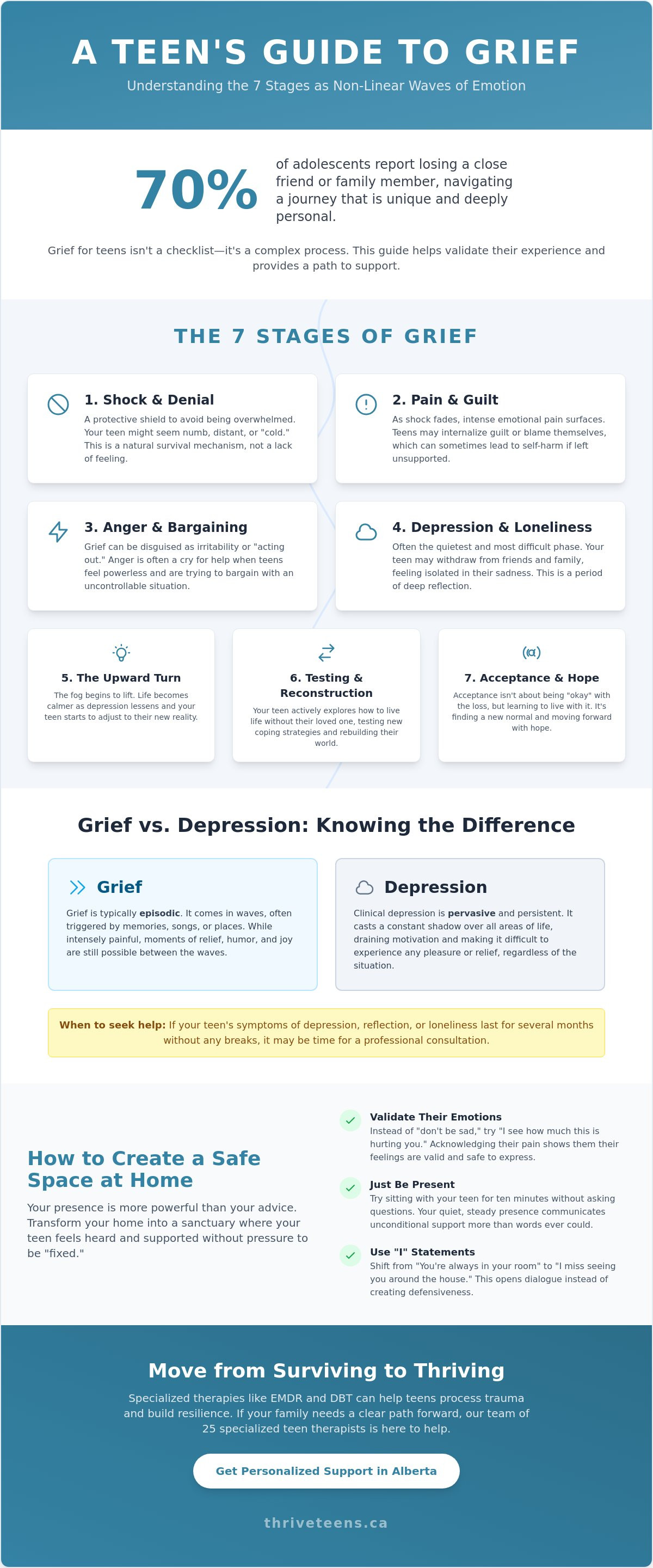
Over 70% of adolescents report having lost at least one close friend or immediate family member, yet watching your teen navigate that loss can leave you feeling completely helpless. You might notice them withdrawing or acting out, and it's natural to worry when their healing doesn't follow a predictable schedule. We often hear about the 7 stages of grief as if they are a linear checklist, but for a teen in Alberta, the reality is much messier. You aren't alone in wondering if their deep sadness has shifted into clinical depression or why they seem to be cycling back to anger just when you thought they were doing better.
This guide is designed to validate those complex emotions and provide a steady hand through the storm. You'll learn how to support your teen at home while discovering local resources, such as the low-cost counseling options at Boost Psychology or the recovery-oriented systems of care expanded by the Alberta government's 2026-2029 business plan. At Thrive Teen Therapy Alberta, we help families move from simply surviving to truly thriving. If you're looking for personalized support, our team of 25 specialized teen therapists is here to help your family find a clear path forward.
Key Takeaways
- Understand how the 7 stages of grief act as a non-linear framework of "waves" rather than a rigid timeline, helping you validate your teen's unique emotional pace.
- Learn to identify the warning signs of internalized pain and guilt that can lead to self-harm, ensuring your teen feels gently supported through their darkest moments.
- Discover how to use "I" statements and emotional validation to transform your home into a safe space where your teen feels heard without the pressure to be "fixed."
- Explore specialized therapeutic modalities like EMDR and DBT that help Alberta youth move beyond survival toward a place of genuine healing and resilience.
What are the 7 Stages of Grief? Validating the Teen Experience in Edmonton
Grief isn't a linear path with a clear finish line; it's more like the unpredictable waves hitting the banks of the North Saskatchewan River. For families in Edmonton and across Alberta, loss comes in many forms. While we often think of death, teens also grieve "secondary losses" like moving to a new school, the end of a first relationship, or a change in family dynamics. To understand these feelings, many look toward the historical framework of What are the 7 Stages of Grief? which expands on the original five-stage model to include shock, denial, anger, bargaining, depression, testing, and acceptance.
To better understand how these emotions might manifest as numbness or withdrawal, watch this helpful video:
For a teenager, these stages don't always look like quiet sadness. Instead, you might see sharp irritability, a sudden drop in grades, or a complete withdrawal from friends. This "grief fog" can feel heavy and isolating, but you don't have to carry it alone. Our 25 specialists at Thrive Teen Therapy Alberta are here to help your family navigate these waters with a steady hand.
Why Teens Process Grief Differently
The adolescent brain is still developing its emotional regulation centers, making the "shock" and "denial" phases feel particularly volatile. When a teen is already managing teen anxiety in a high-pressure school environment, a major loss can short-circuit their ability to cope. They might use denial as a protective shield to keep from being overwhelmed by the gravity of their situation. Because 77% of Alberta parents reported their child's mental health worsened since 2020, understanding these biological differences is more important than ever.
Grief vs. Depression: Knowing the Difference
It's common for parents to fear that a grieving teen has fallen into clinical depression. A helpful way to distinguish the two is that grief is typically episodic, coming in waves triggered by memories, whereas depression is pervasive and persistent across all areas of life. If you notice the "testing" or "depression" stages of the 7 stages of grief lasting for several months without any moments of relief, it may be time for a child psychology consultation to ensure they have the right level of support.
Actionable Step: Tonight, try to sit with your teen for ten minutes without asking questions or offering advice. Just being present in the same room validates that their messy emotions are safe with you and helps lower their defenses naturally.
The 7 Levels of Grief: A Non-Linear Journey for Alberta Youth
The 7 stages of grief are often presented as a tidy ladder, but for a teen, the experience is usually a messy labyrinth. You might see your child move from anger one morning to deep reflection by the afternoon. This non-linear path is normal, but it requires a "steady hand" to navigate. Understanding these levels helps you meet your teen exactly where they are without the pressure of a schedule.
- Shock and Denial: When a loss first occurs, the adolescent brain often uses denial as a protective shield. This isn't your teen being "cold"; it's a survival mechanism that keeps them from being crushed by reality all at once.
- Pain and Guilt: As the shock fades, deep emotional pain surfaces. If these internalized feelings aren't gently supported, they can sometimes lead to teen self-harm as a way to manage the overwhelming weight of guilt.
- Anger and Bargaining: In schools across Sherwood Park, you might see grief disguised as "acting out" or irritability. Your teen is trying to bargain with a situation they cannot control, and their anger is often a cry for help.
- Depression, Reflection, and Loneliness: This is frequently the quietest and most difficult phase for families. Your teen may withdraw to their room, processing the permanence of the loss in a way that feels heavy and pervasive.
The Final Stages: Upward Turn and Reconstruction
The "Upward Turn" occurs when the heavy fog of depression begins to lift. You'll notice small signs of progress, like a return to a regular sleep schedule or a renewed interest in friends. During the reconstruction phase, your teen starts actively building a "new normal." They aren't going back to who they were before the loss; they're learning to integrate the experience into their identity.
Acceptance and Hope
Acceptance is not the same as being "okay" with the loss. Instead, it's the quiet acknowledgment of a new reality. Research on Supporting Your Teen Through the Grief Process highlights that this stage focuses on finding a way to move forward while still honoring what was lost. If your family is struggling to reach this point, our teen therapy Alberta programs provide the specialized support needed to help your teen thrive again. You don't have to navigate this labyrinth alone; our team is ready to walk with you.
Supporting Your Teen Through the Grief Process in Edmonton
Watching your teen struggle through the 7 stages of grief can leave you feeling like an outsider in your own home. It's heartbreaking to see them withdraw or snap at the smallest things. Your first instinct is likely to "fix" their pain, but the most powerful thing you can do is simply create a safe space. This means validating their emotions without rushing to offer solutions. When they say they're angry or that life feels unfair, they don't need a lecture on perspective; they need to know you hear them.
Actionable Step: Use "I" statements to encourage connection without making them feel defensive. Instead of asking, "Why are you acting like this?" try saying, "I've noticed you've been spending more time alone lately, and I want you to know I'm here whenever you're ready to talk." This lowers their guard and keeps the door open.
Communication shouldn't stop at home. If you're in Edmonton or Beaumont, reach out to your teen's teachers or guidance counselors. Mention that they are navigating a significant loss so the school can provide flexibility with deadlines or a quiet place to go if they feel overwhelmed during class. Consistent daily routines also help with teen therapy Alberta strategies for emotional regulation, providing a sense of predictability when their internal world feels chaotic.
Practical Self-Care for Grieving Teens
Movement can be a vital outlet for processing the physical tension that comes with loss. For teen athletes in Alberta, staying involved in their sport offers a structured way to release pent-up anger or frustration. If they aren't into sports, creative expression like journaling or art can help them work through the bargaining phase. Putting feelings into words or colors makes the abstract weight of grief feel more manageable and less frightening.
When to Seek Professional Support
While grief is a natural process, there are "red flags" that suggest your teen needs extra support. If you notice a prolonged drop in grades, a total withdrawal from hobbies they once loved, or changes in sleeping and eating habits that last more than a few weeks, it's time to consider professional help. Accessing child psychology services in Edmonton ensures your teen has a neutral, expert space to process their loss. If you're ready to find the right fit for your family, you can connect with our team of specialists to begin the healing journey together.
Moving Toward Healing: Specialized Grief Therapy in Alberta
When the weight of the 7 stages of grief feels too heavy to carry alone, specialized support can provide the steady hand your family needs. At Thrive Teen Therapy Alberta, we believe that teens should do more than just survive their loss; they should have every opportunity to thrive. Our approach balances clinical expertise with deep, empathetic warmth to lower defenses and foster genuine healing. We're here to walk beside you as your teen works through the complexities of their emotions.
Our team of 25 teen therapy specialists understands that grief often requires more than just talk therapy. We use evidence-based modalities to help teens process their experience:
- EMDR: Eye Movement Desensitization and Reprocessing helps process traumatic memories and the shock associated with loss.
- DBT: Dialectical Behavior Therapy provides practical tools for managing the intense anger and depression phases.
We're committed to making mental health support accessible for all families in our community. This includes offering NIHB therapy for Indigenous youth and providing reduced-rate services for those without insurance coverage. These options ensure that financial barriers don't stand in the way of your teen's recovery.
Our Local Alberta Clinics
Healing shouldn't be hindered by a long commute. We provide in-person support at our clinics in Edmonton and Sherwood Park. For families living in Fort Saskatchewan, Vegreville, or Beaumont, our virtual therapy options offer the same high-quality care from the comfort of home. This flexibility ensures your teen can receive support no matter where you're located in the province.
Building a Compassionate Connection
At the heart of our practice is a commitment to building compassionate connections with every youth we serve. We acknowledge the gravity of your teen's struggle without being alarmist, providing a calm and affirming space for them to be heard. Healing from the 7 stages of grief isn't about forgetting; it's about learning to carry the loss while still moving toward a bright future.
Your family doesn't have to stay stuck in the darkness of loss. Transition from surviving to thriving by booking a consultation with one of our specialists through our 24-hour online portal today.
Start Your Family's Healing Journey Today
Navigating the 7 stages of grief with your teen is one of the most difficult challenges a parent can face. We've explored how grief isn't a linear checklist but a series of waves that require patience and localized support. By validating your teen's emotions at home and recognizing when withdrawal signals a need for expert care, you've already taken the first steps toward reconstruction. You don't have to carry this heavy weight alone.
Whether you're looking for in-person support in Edmonton and Sherwood Park or virtual care in rural Alberta, we're here to help. Our team of 25+ specialized youth therapists provides a safe, affirming space for your teen to move from surviving to thriving. We offer accessible care through NIHB and reduced-rate options to ensure every family can find a path forward. Healing is a gradual process, but with the right connection, your teen can find their strength again.
Frequently Asked Questions
Is it normal for my teen to skip some of the 7 stages of grief?
It's entirely normal for your teen to skip several of the 7 stages of grief. Grief is a deeply personal experience; it doesn't follow a rigid checklist. Some teens might never experience the bargaining phase, while others might skip the initial shock and move straight into anger. This variation doesn't mean they aren't processing the loss correctly; it just means their brain is handling the emotional load in a way that feels safest for them.
How long does the grieving process typically last for a teenager?
There is no fixed expiration date for grief, but you can generally expect the most intense feelings to fluctuate over the first 12 months. While the initial fog might begin to lift after several months, milestones like birthdays or school graduations can trigger fresh waves of sadness. The goal of therapy is to help your teen move from a place of being overwhelmed to a place where they can integrate the loss into their daily life.
Can the 7 stages of grief happen out of order?
Yes, the 7 stages of grief are non-linear and frequently occur out of order. Your teen might feel a sense of acceptance on Monday and wake up in a state of intense anger by Tuesday afternoon. This looping is a standard part of how the adolescent brain reconstructs its identity after a major life change. We view these shifts as evidence that the teen is actively working through their pain rather than suppressing it.
What is the difference between the 5 stages and the 7 stages of grief?
The primary difference is that the 7-stage model provides a more detailed roadmap by adding "Shock" and "Testing/Reconstruction" to the original framework. While the 5-stage model covers core emotional responses, the 7-stage version acknowledges the physical numbness of the initial impact and the active work required to build a "new normal." This expanded view helps parents better understand the transition from deep depression to functional healing.
How do I know if my teen's grief has become 'complicated grief'?
Grief may have shifted into complicated grief if your teen's symptoms remain pervasive and prevent them from attending school or socializing for more than six months. With 29.3% of Albertans reporting fair to poor mental health in 2026, it's important to watch for persistent "stuckness." If their withdrawal feels permanent rather than episodic, our specialists can help determine if they need targeted support to move forward.