
What if the toys scattered across your living room floor are actually the most sophisticated tools your child has to tell you they're struggling? It's deeply painful to feel a growing distance between you and your little one, especially when school stress in Edmonton districts leads to outbursts you can't quite decode. You might worry that play therapy is just an expensive playdate, but for a child, play is their first and most natural language. We understand the weight of these worries, and at Thrive Teen Therapy Alberta, we're here to provide a steady hand for your family.
In this guide, you'll discover how play therapy helps children in the Edmonton area process big emotions and build lasting resilience when words simply aren't enough. Our team of 25 specialists uses this evidence-based approach to help your child feel heard and understood in a safe, affirming environment. You'll gain a clear understanding of the therapeutic process and walk away with practical tools to support emotional regulation at home. If you're ready to see your child move from surviving to thriving, you can learn more about our child psychology services or meet our therapy specialists to start the healing journey today.
Key Takeaways
- Learn how play therapy serves as a vital bridge for communication when your child doesn't have the words to express their big emotions.
- Gain insights into how our therapists use specific toys and activities to gently guide your child toward emotional regulation and resilience.
- Get practical advice on what to say before the first visit to help your child feel safe and prepared for their journey.
- Discover the peace of mind that comes from our team of 25 specialists who provide expert, compassionate care across Edmonton and Sherwood Park.
What is Play Therapy? Understanding the "Language of Play" for Edmonton Kids
It's incredibly isolating to watch your child struggle with big emotions they can't quite explain. You might find yourself asking why they're suddenly hitting, why they're refusing to go to school, or why they seem so withdrawn. When you try to "talk it out," you're often met with silence or a shrug. It's normal to feel confused or even frustrated when traditional conversation doesn't bridge the gap. At Thrive Teen Therapy Alberta, we know that for a child, play is their native tongue. Play therapy is a specialized clinical approach where play serves as the primary communication tool between the therapist and the child.
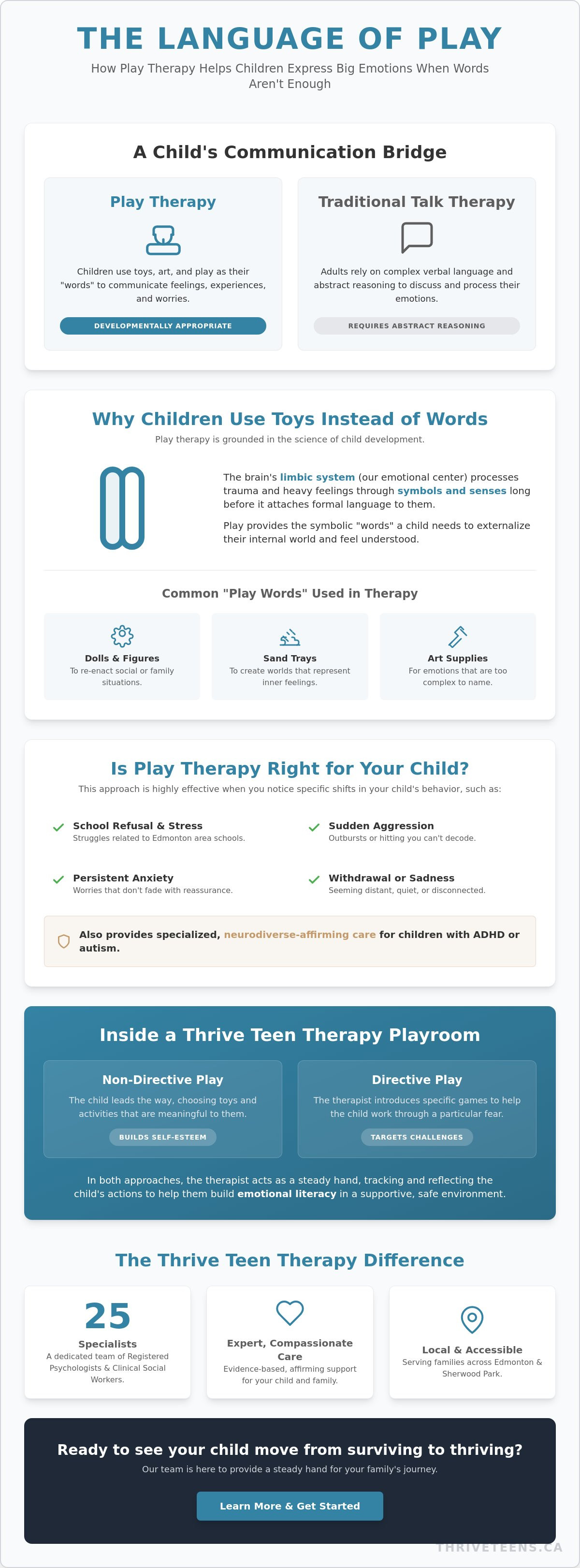
Play therapy is a developmentally appropriate mental health intervention for children. While adults rely on complex verbal strings to explain their stress, a seven year old might instead use a miniature figure to show how it feels to be overwhelmed in an Edmonton classroom. Traditional talk therapy often fails younger children or neurodivergent youth because it requires a level of abstract reasoning that their brains haven't fully mastered yet. By meeting them where they're at, we create a space where they can finally feel understood.
To better understand this concept, watch this helpful video:
Why Children Use Toys Instead of Words
The brain science behind this approach is fascinating. The limbic system, which is responsible for our emotions and memories, processes trauma and heavy feelings through symbols and sensory experiences long before it attaches language to them. In a session, "play words" include things like dolls, sand trays, and art supplies. When a child picks up a specific toy, they aren't just playing; they're externalizing an internal struggle. Our team of 25 specialists is trained to translate these symbolic actions into meaningful progress.
Is Play Therapy Right for Your Family in Alberta?
Many families come to us when they notice specific shifts in their child's behavior. Common indicators include school refusal in local Edmonton districts, sudden aggression, or persistent anxiety that doesn't go away with reassurance. We also provide specialized, neurodiverse-affirming care for children with ADHD or autism. If you're seeing these signs, our child psychology experts can help your family find a path forward. You don't have to guess what your child is feeling; we can help you hear what they're saying through their play.
How Play Therapy Works: Inside a Professional Alberta Playroom
It's exhausting to feel like you're constantly walking on eggshells, wondering what might trigger the next meltdown or period of tearful withdrawal. You want to help your child so badly, but every attempt at a serious talk seems to make the walls go up even higher. At Thrive Teen Therapy Alberta, we've seen how this disconnect wears on a parent's heart. We provide a bridge through play therapy, offering foundational child psychology support in a space where your child's struggle is finally met with immediate acceptance.
Our playrooms in Edmonton and Sherwood Park are intentionally designed to facilitate this healing process. You'll find specific categories of toys, such as expressive art supplies for feelings that are hard to name and miniature figures for re-enacting social challenges. Depending on your child's unique needs, we use different clinical approaches. In non-directive sessions, your child leads the way, which builds their self esteem and sense of control. In directive sessions, the Registered Psychologist or Clinical Social Worker might introduce specific games to help your child face a particular fear. In both cases, the therapist acts as a steady hand, ensuring the environment remains supportive and safe.
The Role of the Play Therapist
The therapist doesn't just sit and watch your child; they actively track and reflect their actions to help them build emotional literacy. By mirroring what they see, the therapist helps the child connect their play to their actual feelings. This expert caregiver bond is essential for creating the safety needed to overcome deep seated anxieties. If you're ready to find a partner in your child's wellness, you can meet our Edmonton therapists to learn more about our team.
Key Benefits for Your Child’s Development
As your child engages in play therapy, you'll start to see meaningful shifts in their daily life. While every journey is different, parents often report several key improvements:
- Improved emotional regulation: You'll likely notice a decrease in meltdowns at home as your child learns to manage their nervous system.
- Social skills: They build confidence that translates directly to the playground and classroom.
- Creative problem solving: Your child develops the tools they need to handle everyday challenges with more resilience.
A Step-by-Step Guide: How to Prepare Your Child for Their First Session
Taking the first step toward professional support can feel like a heavy weight on your shoulders. You might worry that your child will be scared, or that they'll refuse to walk through the door. It's completely natural to feel a bit of "new appointment anxiety" yourself. We've helped hundreds of families through this transition, and we've found that a little bit of preparation goes a long way in making the first play therapy session feel like a positive adventure rather than a clinical chore.
One of the most effective ways to lower your child's defenses is to help them visualize the experience before they arrive. We recommend that you meet our Edmonton therapists online by showing your child a photo of their specialist. When a child can put a friendly face to a name, the "fear of the unknown" often begins to melt away. This simple 30 second activity can make the drive to our clinic much calmer for everyone involved.
What to Say to Your Child
Choosing the right words is key to setting a supportive tone. You don't need a complex explanation; keep it simple and honest. You can use this script: "We are going to a special playroom where you get to play while I talk to a helper." It's helpful to emphasize that this is a no-judgment zone where there are no "wrong" ways to play. This framing shifts the focus from "fixing a problem" to "finding a safe space" where they can truly be themselves.
Your First Appointment Checklist
To ensure a smooth transition into our care, consider these practical steps for your first visit:
- Arrive early: Aim to be in our waiting area 10 minutes before your scheduled time. Whether you're commuting from Fort Saskatchewan or Beaumont, this buffer allows your child to settle into the environment.
- Bring school documentation: If your child has an Individual Support Plan (ISP) from an Edmonton area school, bring a copy. This helps us align our therapeutic goals with their academic environment.
- Prepare for the intake: Your first meeting is often a 50 minute parent-only intake session. This allows us to gather family history and discuss your concerns in depth without your child in the room.
If you're ready to begin this journey and want to ensure your child has the right support system in place, you can explore our child psychology services to learn more about our intake process and how we partner with parents for long term success.
Finding Specialized Child Psychology in Edmonton and Area
Finding the right clinical support shouldn't feel like a guessing game. While many generalist practices treat adults and children alike, a specialized youth clinic understands the nuances of a child's developing brain. When a therapist "loves working with youth," they bring a specific energy and patience to every play therapy session. This specialization is what allows our team to expertly connect with your child, ensuring they feel safe enough to share their inner world. You deserve a partner who sees your child’s strengths while helping them overcome their current challenges.
Our multidisciplinary approach means your family has access to a wide range of expertise under one roof. Whether your child needs neurodiverse-affirming support or specific LGBTQ2S+ advocacy, we have the resources to help. For families looking for a holistic view of youth wellness, our pillar article on Child Psychology in Edmonton provides an in-depth look at how we support growth from early childhood through the primary years.
The Thrive Approach to Play Therapy
At Thrive Teen Therapy Alberta, we're dedicated to helping families do more than just survive difficult seasons. We have 25 specialists who focus exclusively on the needs of children and adolescents. By offering in-person sessions at our Edmonton and Sherwood Park locations, we ensure that high quality care is accessible to families throughout the region. Our goal is to provide a steady hand for parents, acting as a reliable ally in your journey toward a more peaceful home life.
Next Steps for Your Family
If you're ready to see if our approach is the right fit, we've made the path forward as clear as possible. You can use our 24-hour online booking system to find a specialist who aligns with your child's needs. We also understand that mental health often impacts the whole family. If you have older children navigating the pressures of high school, you might find our guide on teen therapy helpful for coordinating support for siblings. Starting with an initial consultation allows us to ensure a strong connection, giving your child the best possible start in their play therapy journey.
Start Your Family's Journey Toward Emotional Wellness
Watching your child struggle to express their inner world is one of the hardest experiences a parent can face. You've learned how play therapy transforms toys into a powerful vocabulary for healing and how a bit of preparation can turn that first visit into a moment of hope. Healing doesn't happen overnight, but having a steady hand to guide you makes the path feel manageable. It's time to move beyond just surviving the daily meltdowns and start building a home life where everyone can truly thrive.
Our team of 25 specialists provides a neurodiverse-affirming and LGBTQ2S+ safe space for every child in our community. With convenient clinics in both Edmonton and Sherwood Park, expert support is always within reach. We're here to partner with you as you navigate these big emotions and celebrate your child's growth. If you're ready to see your little one rediscover their joy, you can Book a session with our specialized Play Therapy team today. You've taken the first step by being here; let's take the next one together.
Frequently Asked Questions
How is play therapy different from just playing at home with my child?
Play therapy is a clinical intervention led by a trained professional who uses play to track and reflect emotional themes. Unlike home play, every toy in our Edmonton clinic is selected to help your child externalize internal conflicts. The therapist acts as a steady hand, translating symbolic actions into emotional growth. This structured environment allows for deeper processing than a casual afternoon at the park.
How long does a typical play therapy session last at your Edmonton clinic?
A standard session at our clinic typically lasts for 50 minutes. This timeframe is carefully chosen to give your child enough time to settle in, explore the playroom, and engage in meaningful work without becoming overly fatigued. We maintain a consistent schedule to help your child feel secure and build a predictable routine that supports their healing journey.
At what age should a child start play therapy?
Children as young as 3 years old can begin this type of therapy. At this age, their verbal skills are still developing, making play the most effective way for them to communicate their needs and fears. We work with children through age 12, tailoring our approach to their specific developmental stage. Whether they're dealing with school anxiety or family changes, meeting them where they're at is our priority.
Will I be in the room with my child during their play therapy session?
Generally, the child and therapist work together one on one to build trust and autonomy, though parents are deeply involved in the overall process. While you might not be in every session, we prioritize parent consultations every 4 to 6 weeks to discuss progress and provide you with practical tools for home life. This ensures you feel like a partner in your child's wellness journey while respecting their private therapeutic space.
How many sessions will it take before I see changes in my child’s behavior?
While every child is unique, research from the Association for Play Therapy suggests that many children show significant improvement within 20 sessions. Some families notice small shifts in emotional regulation after just 4 or 5 visits. We focus on building long term resilience rather than quick fixes. Your therapist will consistently check in with you to evaluate goals and ensure your child is moving toward a place of wellness.