
You’ve watched your teen sit at the kitchen table for hours, staring at a single page of homework while their confidence slowly fades. You might find yourself wondering if they are simply unmotivated, or if there is a deeper reason why school feels like an uphill battle. It is exhausting to advocate for a child when the school system doesn't seem to "get" them, especially when you are worried about the complexity of private testing. You want answers, but you also want your child to feel seen and supported.
We understand the weight of these worries. A psychological assessment is not about pinning a cold, clinical label on your teen; it is a collaborative discovery of their unique learning and emotional fingerprint. By identifying their specific strengths and hurdles, we can transform their daily struggles into a clear roadmap for academic success and emotional well-being. In this guide, we will explain how the assessment process works in Alberta, how it leads to actionable school support through an Individualized Program Plan (IPP), and what to expect regarding the 2026 PAA recommended fee of $235 per session.
Key Takeaways
- Learn how a psychological assessment acts as a neurodiverse-affirming roadmap, helping you move past labels to truly understand how your teen thinks and learns.
- Explore our supportive 4 to 6-week testing process, designed to lower your teen's defenses and provide a calm, steady experience from start to finish.
- See how specific results for ADHD or learning disabilities open doors to essential school funding and specialized classroom technology in Alberta.
- Identify the key qualities of a youth-centered psychologist in Edmonton and Sherwood Park who prioritizes a strengths-based, inclusive approach.
What is a Psychological Assessment and Why Does Your Teen Need One?
Watching your teen’s confidence slip away is incredibly painful for any parent. You might feel overwhelmed if your child is currently struggling with teen-anxiety or avoiding school entirely. A psychological assessment is a comprehensive series of tests and interviews used to understand how a young person thinks, learns, and processes emotions. It serves as a compassionate, neurodiverse-affirming roadmap for support rather than a way to simply "label" your child's behavior.
This process involves specialized psychological testing to look deep into a teen’s cognitive and emotional profile. While many people are familiar with a standard IQ test, a full psychoeducational evaluation goes much further. It looks at the specific nuances of conditions like ADHD or giftedness to see how they impact your teen’s daily life and academic performance.
To better understand how these evaluations provide clarity for families, watch this helpful video:
Recognizing the Signs: When to Seek Professional Insight
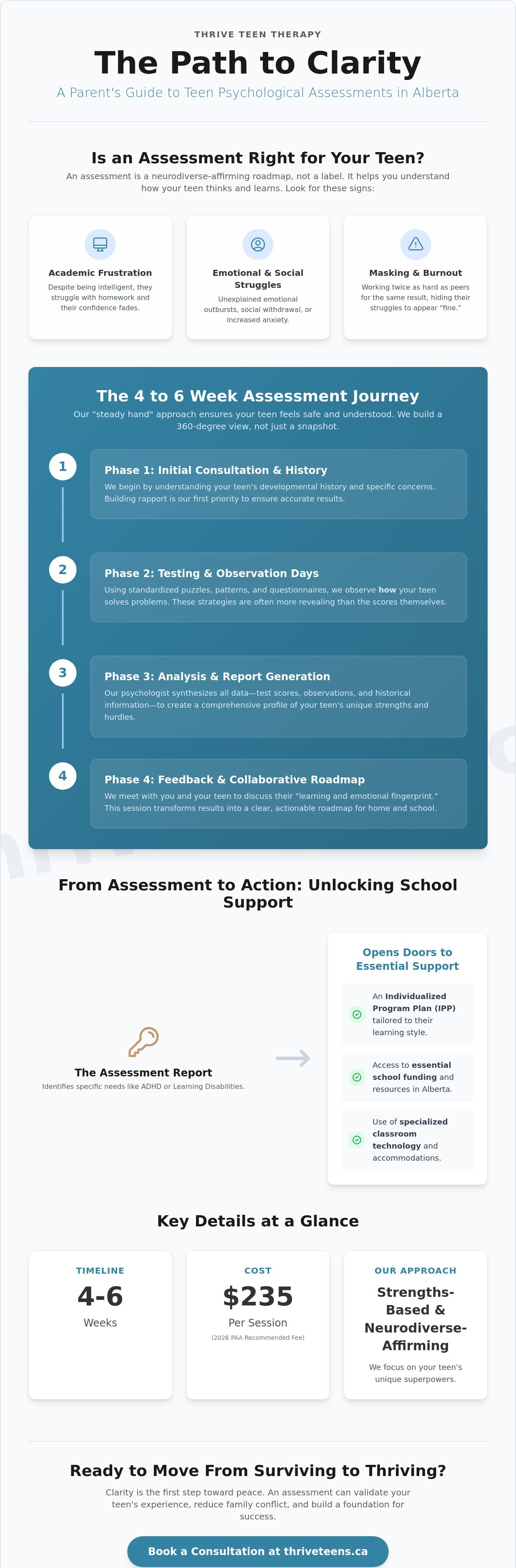
Parents often seek help when they notice persistent academic frustration despite their child's high intelligence. You might see unexplained emotional outbursts, social withdrawal, or even more serious teen self-harm concerns. We also see many "masking" teens. These are high achievers who look fine on the outside but are secretly burning out because they don't have the right tools to manage their unique brain. If your child is working twice as hard as their peers for the same result, it is time for deeper insight.
The Goal: Moving from 'Surviving' to 'Thriving'
Clarity is the first step toward peace. When we use a psychological assessment to show that a teen isn't "lazy" but is actually struggling with executive function, family conflict often decreases. Validating your teen’s experience through objective results helps them feel understood. It allows them to stop blaming themselves and start building on their unique strengths, moving the family dynamic from a place of constant stress to one of shared understanding.
The Step-by-Step Process of a Psychological Assessment in Alberta
The thought of your teen undergoing hours of testing can feel daunting for both of you. We use a "steady hand" approach to ensure they feel safe and understood throughout the entire journey. A typical psychological assessment spans 4 to 6 weeks. This intentional timeline allows our specialists to gather a deep, 360-degree view of your child’s life, including perspectives from you and their teachers. We want to see the full picture, not just a snapshot of one day.
You can help lower your teen's defenses by reframing the experience. Try explaining that this is a "brain check-up" designed to find their unique superpowers and learning style, rather than a pass or fail exam. When they understand the goal is to make life easier for them, they're more likely to engage authentically with the process.
Phase 1: The Initial Consultation and History
Our process starts with a detailed look at your teen's developmental history. We want to understand the specific concerns you're facing within the Edmonton or Sherwood Park school systems. Building rapport is our first priority; the meet-our-edmonton-therapists team knows that a teen who feels comfortable will provide the most accurate results. This stage follows the general framework for a Mental Health Assessment in Alberta, ensuring we cover all clinical and emotional bases from the start.
Phase 2: The Testing and Observation Days
Testing days involve a variety of standardized puzzles, patterns, and questionnaires. We don't just look at whether your teen gets an answer right. We carefully observe how they solve a problem. Do they get frustrated quickly? Do they try multiple creative strategies? These observations are often more revealing than the scores themselves, as they highlight how your teen's brain handles real-world challenges.
Phase 3: The Debrief and Recommendations
The final phase is the debrief meeting, where we translate clinical jargon into a clear action plan for your family. You'll receive a comprehensive written report that acts as your child's "owner's manual." This document provides the evidence needed to advocate for your teen effectively. If you're ready to get the answers your family deserves, you can explore our assessment services to find the right fit for your teen.
Navigating the Results: Connecting Assessment to School Support
Receiving the final report can feel like a massive weight has been lifted from your shoulders. You finally have a document that explains why your teen has been struggling, but the next step is ensuring this information actually changes their daily experience at school. A psychological assessment is only as effective as the support it triggers in the classroom. In Alberta, a formal diagnosis of ADHD or a Learning Disability is often the essential key that opens doors to provincial funding and specialized technology.
We want you to feel empowered during your next school meeting. Instead of relying on gut feelings, you can walk in with objective data that clearly outlines your child's needs. If you're wondering how this data translates into a formal school document, read our guide on What is an Individual Support Plan (ISP)?. Having this "owner's manual" for your teen’s brain ensures that teachers aren't just guessing what might help. It replaces frustration with a clear, evidence-based strategy.
Implementing an Individual Support Plan (ISP)
Our specialists understand the specific requirements of the Edmonton Public and Catholic school boards. We work to ensure our recommendations are realistic and actionable within the local system. Common accommodations might include extra time on exams, access to a quiet space for focus, or assistive speech-to-text software. These tools don't give your teen an unfair advantage; they simply level the playing field so their intelligence can shine through without being blocked by executive function hurdles.
Beyond the Classroom: Emotional and Social Support
The benefits of a psychological assessment extend far beyond academics. We use these insights to tailor young adult therapy or social skills support that fits your teen's specific profile. It is about helping them embrace a neurodiverse-affirming identity. When a teen understands how their brain works, they can stop feeling "broken" and start feeling capable. If you're ready to bridge the gap between testing and real-world support, you can connect with our expert team today to discuss the next steps for your family.
Choosing the Right Psychologist for Your Teen in Edmonton & Sherwood Park
Finding the right professional to conduct your teen's psychological assessment is a deeply personal decision. You want someone who doesn't just see a set of symptoms but sees the whole person behind the data. It is vital to choose a practice where the clinicians explicitly state they love working with youth. This genuine passion changes the entire atmosphere of the testing room, turning a clinical requirement into a supportive, human connection.
We believe in a neurodiverse-affirming lens. This means we look for your teen's inherent strengths and unique processing styles rather than just focusing on what they "can't" do. Logistics matter too. Many families have coverage through Employee Assistance Programs, and we are proud to offer support through NIHB therapy for Indigenous families. With our team of over 25 specialists, we can match your teen with a professional who fits their specific personality and needs.
Questions to Ask Before Booking
Finding the right fit involves asking the right questions. Before you commit to a provider, consider these points to ensure your teen will feel comfortable:
- Do you specialize specifically in adolescent and child psychology?
- How do you involve the teen in the feedback process so they feel empowered by their results?
- What is your current waitlist for assessments in Sherwood Park or Edmonton?
The Thrive Difference: A Holistic Approach
We are committed to making sure every Alberta family can access the answers they need. This is why we offer reduced rated options for those who may face financial barriers. Our space is also deeply inclusive, providing affirming counselling for the LGBTQ2S+ community. We want every teen to feel safe, heard, and valued from the moment they walk through our doors.
You don't have to keep guessing why your teen is struggling. Ready to get the clarity your family deserves? Book a consultation with our assessment team today to start your teen's journey toward thriving.
Empowering Your Teen’s Future Today
Watching your child struggle is one of the hardest experiences a parent can face. You now understand that a psychological assessment is more than just a series of tests; it is a bridge between confusion and clarity. By identifying your teen’s unique learning profile, you can secure the essential school support they deserve and help them move from simply surviving their classes to truly thriving in their environment.
At Thrive Teen Therapy, our team of 25+ teen specialists provides a neurodiverse-affirming and LGBTQ2S+ safe space where every young person feels seen and heard. With in-person clinics conveniently located in Edmonton and Sherwood Park, we offer the steady hand your family needs during this transition. You don't have to navigate these complexities alone.
Take the first step toward clarity; explore our Assessment Services today.
Your teen’s journey toward confidence and academic success starts with a single answer. We're ready to help you find it and build a plan for a brighter tomorrow.
Frequently Asked Questions
How much does a psychological assessment cost in Alberta?
The Psychologists' Association of Alberta (PAA) has set the recommended fee for a 50-minute assessment session at $235.00 for 2026. While individual psychologists set their own rates, this provincial guideline helps families plan for the financial investment. Many private insurance plans cover a portion of these costs. We recommend checking your specific policy for "Psychological Services" to see how much of the fee is reimbursable for your family.
How long is the waitlist for a psychoeducational assessment in Edmonton?
Wait times for a psychoeducational assessment in Edmonton vary significantly between public and private providers. A 2025 survey identified that 45% of Canadian youth found long wait times to be a primary barrier to accessing care. While school-based testing often involves waits of a year or more, private clinics can typically start the 4 to 6-week process much sooner. This allows your teen to get the support they need without waiting for the next school year.
Will my teen’s school accept a private psychological assessment?
Yes, Alberta schools accept private assessments as valid evidence for creating an Individualized Program Plan (IPP) or Individual Support Plan (ISP). These reports provide the essential clinical data that teachers and school boards need to implement classroom accommodations. By providing a comprehensive private report, you give the school a clear, evidence-based roadmap. This helps the school system understand and support your teen's specific learning needs without further delay.
What is the difference between a school-based assessment and a private one?
The primary differences between school-based and private assessments are speed, depth, and ownership. School assessments are provided at no cost but often focus strictly on academic placement and have very long waitlists. A private psychological assessment is usually much faster and offers a more holistic view of your teen's emotional and social well-being. Additionally, you own the private report and can choose exactly how and when to share the results with others.
Can a psychological assessment diagnose both ADHD and giftedness?
A comprehensive assessment can absolutely identify both ADHD and giftedness, which is often called being "twice-exceptional." It is common for high intelligence to mask the symptoms of ADHD, leading to secret burnout and deep frustration for the teen. We look at the specific way your teen’s brain processes information. This ensures we capture both their high-level strengths and the executive function hurdles that might be making their daily life feel more difficult than it needs to be.
How do I explain the need for testing to my teenager without upsetting them?
We suggest framing the assessment as a way to find the "owner's manual" for their unique brain rather than a test they can fail. Explain that everyone processes information differently, and this process helps identify their specific strengths and the tools that will make school feel less exhausting. When a teen understands that the goal is to make their life easier and reduce daily friction, they often feel more empowered and less anxious about the experience.