
What if the school meetings you currently dread could actually become the turning point where your teen finally feels understood? It's heartbreaking to watch your child lose their spark in a classroom that doesn't seem built for them. You've likely spent hours trying to decode Alberta Education terminology while feeling like your voice is being ignored by administrators. Our team of 25 teen therapy specialists understands that when a student feels unseen, their academic confidence can plummet before the first report card of the year arrives.
You already know that your teen has unique strengths that standard tests cannot measure. This guide will show you how an individual support plan can serve as a neurodiverse-affirming roadmap, ensuring your child doesn't just survive but thrives in Edmonton schools through 2026. We will help you gain a clear understanding of ISP components, build your confidence in advocating for your teen, and provide a roadmap for therapeutic and academic integration that puts your family back in the driver's seat.
Key Takeaways
- Discover how an individual support plan provides a neurodiverse-affirming roadmap that transforms your teen's school experience from one of struggle to one of empowerment.
- Uncover the essential components of a successful ISP, including how to navigate the "Accommodations vs. Modifications" debate to best meet your child’s unique learning and emotional needs.
- Get a clear, step-by-step guide on how to advocate for your child in Edmonton schools, from documenting home-based challenges to effectively collaborating with school Learning Coaches.
- Learn why combining a school-based plan with specialized therapeutic support is the key to building the executive function skills and emotional resilience your teen needs to truly thrive.
The Weight of Watching Your Teen Struggle: Why an Individual Support Plan Matters
It is heartbreaking to watch your bright, creative teenager begin to believe they are "less than" because they can't keep up with a standard classroom pace. You see their brilliance at home, yet at school, they are drowning in assignments and losing their spark. This disconnect often stems from traditional school structures that weren't built for neurodivergent minds. An individual support plan changes this dynamic by moving away from trying to "fix" your child. Instead, it focuses on Person-centred planning, a philosophy that builds a school environment around your teen's specific strengths and emotional needs.
To better understand this concept, watch this helpful video:
Think of this plan as a vital bridge. It connects the support they receive at home with their daily school life and specialized teen therapy in Alberta. When these three areas align, your teen stops feeling like they are constantly failing and starts feeling understood. This collaborative approach ensures that every adult in their life is working from the same playbook to foster their success.
Is Your Teen Just 'Lazy' or Are They Unsupported?
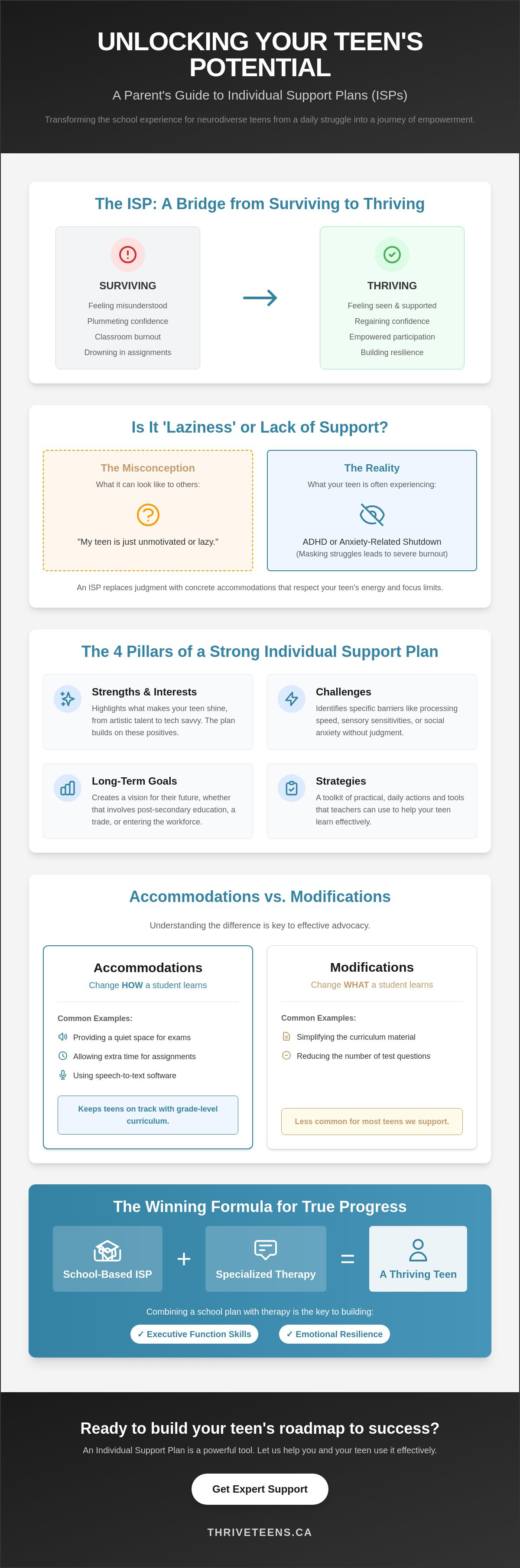
Parents often worry their teen is simply unmotivated, but what looks like "laziness" is frequently a symptom of ADHD or anxiety-related shut-down. When a student has to work twice as hard as their peers just to stay focused, they eventually run out of gas. This exhaustion leads to "masking," where a teen hides their struggles to fit in, which eventually causes severe burnout. An individual support plan identifies these invisible hurdles, replacing judgment with concrete accommodations that respect your teen's energy limits.
The Goal of an ISP: Moving from Surviving to Thriving
Success isn't just about a higher grade on a math test; it's about your teen regaining their confidence and learning how to advocate for what they need. We want to see them move from a state of constant survival mode into a place where they feel empowered to participate in their own education. An individual support plan is a collaborative roadmap that outlines specific academic and emotional strategies to ensure every Alberta student has a fair path to success. By focusing on holistic well-being, we help them build a future where their neurodiversity is viewed as a strength rather than a barrier.
What is an Individual Support Plan? Understanding the Core Components
Watching your teen feel misunderstood by the school system is exhausting. You see their potential, but the current classroom environment might be masking it. An individual support plan acts as a bridge between their unique brain and the school's expectations. It's a collaborative document that ensures every teacher sees your child's strengths, not just their struggles. By focusing on a person-centered approach, we can move away from "fixing" a student and toward supporting their growth.
A strong individual support plan includes four pillars:
- Strengths and Interests: Highlighting what makes them shine, like their artistic talent or deep knowledge of technology.
- Challenges: Identifying specific barriers, such as processing speed, sensory sensitivities, or social anxiety.
- Long-term goals: Creating a vision for their future, whether that involves post-secondary education or entering the workforce.
- Strategies: Practical, daily tools teachers use to help your teen succeed.
Parents often ask about the difference between accommodations and modifications. Accommodations change how a student learns. This might include providing a quiet space for exams or using speech-to-text software. Modifications change what they're expected to learn, often by simplifying the curriculum. Most teens we support benefit from robust accommodations that keep them on track with their peers while reducing sensory or cognitive load.
To make these strategies effective, we rely on specialized assessments. These clinical evaluations provide the data needed to move from "trying harder" to "working smarter." When a teen understands their own profile, they can find their voice. We encourage teens to attend their own meetings; it's a powerful step toward self-advocacy and independence.
Key Elements of a Neurodiverse-Affirming Plan
A modern plan goes beyond academics to include sensory needs and emotional regulation. If your teen is easily overwhelmed by bright lights or loud hallways, their plan should include sensory breaks as a non-negotiable right. We focus on measurable goals that celebrate progress. Instead of a goal like "will stay in seat," we prefer "will use a self-regulation tool when feeling overwhelmed." This shifts the focus from compliance to empowerment.
Individualized Program Plans (IPP) vs. ISPs in Alberta
In Alberta, terminology can be confusing. Alberta Education officially uses the term Individualized Program Plan (IPP), but many local boards, including Edmonton Public Schools, have transitioned to using the individual support plan label. The goals remain the same: providing a tailored education. Whether your school uses the provincial term or the local label, the document's legal weight in providing necessary supports remains constant. If you're feeling stuck, our teen therapy specialists in Alberta can help you translate clinical findings into school-room success.
Navigating the Path: How to Secure an ISP for Your Child in Edmonton
Watching your teen struggle with schoolwork while their confidence fades is heartbreaking for any parent. You see the effort they put in, yet the results don't seem to match. Securing an individual support plan is a collaborative process designed to bridge that gap. It starts with your voice as a parent. First, begin documenting the struggle by keeping a detailed log of home-based challenges, such as three-hour homework sessions that end in tears or physical symptoms of anxiety before exams. This data, combined with teacher feedback, forms the foundation of your request.
Next, request a formal meeting with the school’s Learning Coach or administration. Don't feel you have to go in empty-handed. Bringing evidence is crucial; specifically, psychoeducational assessments provide the clinical data schools need to unlock specific funding and accommodations. During the collaborative meeting, advocate for your teen with a steady hand. A successful plan reflects the core components of an ISP, which include measurable goals and a clear understanding of your teen's unique learning profile. By staying calm and focused on solutions, you ensure the school sees you as a partner in your child's success.
Actionable Steps for Your First School Meeting
Preparation reduces the stress of these high-stakes conversations. When you sit down with the school team, consider asking these specific questions:
- What specific classroom interventions have been tried in the last six months?
- How will we measure the success of the goals in this individual support plan?
- Which staff member will be my primary point of contact for weekly updates?
To remain a reliable ally for your teen, validate their feelings without becoming the "enforcer" of school rules. Let them know you're on their team, not just another person pointing out their deficits.
Local Resources for Families in Sherwood Park and Beaumont
If you live in Sherwood Park or Beaumont, it's vital to know your rights within the Elk Island Public Schools and Black Gold School Division. These districts have specific protocols for implementing inclusive education. For families just beginning this journey, our ADHD guide for Edmonton families offers a starting point for understanding diagnosis and school support. Whether you're in the heart of Edmonton or the surrounding communities, help is available.
Beyond the Paperwork: How Therapeutic Support Turns a Plan into Progress
You finally have the document in hand. It lists the accommodations, the goals, and the specialized supports. However, a piece of paper cannot teach your teen how to quiet a racing heart during a chemistry exam or how to break down a massive social studies project. An individual support plan is a vital roadmap, but it needs an engine to move forward. Without addressing the underlying emotional regulation and executive function gaps, even the most detailed school plan can stall.
Our teen ADHD specialists bridge the gap between the classroom and real life. We help youth build the practical skills that an ISP often assumes they already possess. If a student doesn't feel emotionally safe or understood, their brain stays in "survival mode." In this state, academic learning is physically impossible. Therapy provides the tools to regulate those big emotions, which allows the accommodations in the individual support plan to actually take root and produce results.
Connecting with an Edmonton Therapist
Our team of 25 specialists works directly with youth to help them understand their own unique brains. We believe that when a teen understands why they learn differently, they can advocate for themselves with confidence rather than shame. Finding the right connection is essential for progress. We encourage parents to meet our Edmonton therapists to find a personality match that makes their teen feel truly heard and respected.
Building a Support Village
Families often feel exhausted by the effort of managing school meetings and diagnostic paperwork. You don't have to navigate the Alberta school system alone. We advocate for a coordinated approach where parents, teachers, and psychologists work as a unified team. This "village" ensures that the strategies developed in our sessions carry over into the classroom. We are here to be your steady hand, providing the expert care and emotional support your family needs to move from just surviving to truly thriving.
Empower Your Teen to Thrive in the Classroom and Beyond
Watching your teen struggle to keep up at school can feel like a heavy, lonely burden. You want them to feel capable again, but navigating the school system often feels overwhelming. An individual support plan changes that by turning your child's specific challenges into a structured, actionable strategy for growth. You've seen that a successful plan requires both clear school accommodations and the right therapeutic support to help those changes stick. Now, it's time to move from paperwork to real progress.
Our team of 25+ teen therapy specialists offers neurodiverse-affirming and LGBTQ2S+ inclusive care designed to help your teen find their footing. We support families in Edmonton, Sherwood Park, and throughout Alberta via virtual sessions. Ready to support your teen's journey? Meet our team of specialized therapists in Edmonton and Sherwood Park today. Better days are ahead, and your family deserves a steady hand to help you get there.
Frequently Asked Questions
Is an Individual Support Plan legally binding in Alberta schools?
An individual support plan isn't a legal contract, but it's a mandated requirement under the Alberta Education Act for any student identified with special needs. Schools across Edmonton are required to follow the 2004 Standards for Special Education, which means they must provide the accommodations and services outlined in your teen's plan. If you feel your child isn't receiving the promised help, these provincial standards give you the framework to advocate for their rights.
What is the difference between an IPP and an ISP in Edmonton?
The difference between these two documents is mostly about the name, as Edmonton Public Schools shifted to the term Individual Support Plan in 2017 to emphasize holistic care. While some school boards in Alberta still use the term Individualized Program Plan (IPP), both documents serve the same purpose of documenting your teen's strengths and required accommodations. Whether it's called an IPP or an ISP, the goal is to ensure your teen feels understood and supported in their learning environment.
Does my child need a formal ADHD diagnosis to get an ISP?
Yes, a formal diagnosis is typically necessary to access the specific Alberta Education coding that triggers a formal individual support plan. Without a clinical diagnosis of Adolescent ADHD or another neurodiverse condition, the school might provide informal classroom help but won't receive the provincial funding required for more intensive supports. If you're feeling lost in this process, our specialist team can guide you through psychoeducational assessments to get the clarity your family needs.
How often should an Individual Support Plan be reviewed and updated?
You should review your teen's plan at least 3 times every school year to make sure the strategies are actually working. Most Edmonton schools schedule these essential check-ins during October, January, and June. It's common for a teen's needs to shift as the curriculum gets harder, so don't feel like you have to wait for a scheduled date. You can request a meeting whenever you notice your child's stress levels rising or their grades beginning to slip.
Can a private psychologist from Thrive attend my teen's school meeting?
Yes, our team of 25 Teen Therapy Specialists can attend school meetings in Edmonton and Sherwood Park to act as a steady hand for your family. We know how intimidating it feels to sit across from a board of educators when your teen is struggling. By joining these meetings, we help translate clinical needs into classroom actions, ensuring your teen's teachers truly see their potential. You don't have to navigate the school system alone; we're here to be your partners in this journey.