
Imagine walking into your kitchen on a Tuesday evening only to feel the air thicken with tension the moment your teenager looks up from their phone. You want to reach out, but you're afraid that one wrong word will spark another week of silence or a door slamming in your face. If you feel like you're constantly walking on eggshells at home, you aren't alone. Many parents in Edmonton share this deep fear that their emotional bond with their child is permanently breaking. You might find yourself searching for answers but feeling overwhelmed by clinical jargon that doesn't offer a real path forward. Understanding what is eft, or Emotionally Focused Therapy, can provide the clarity you need to move from constant conflict to a secure connection.
We agree that your family deserves a home where everyone feels safe and heard. This guide promises to demystify the EFT model and offer you genuine hope that family harmony is possible. We'll preview the specific steps you can take to find a specialist in Alberta and explain how our team of 25 teen therapy specialists uses this approach to repair fractured relationships. You can start by exploring our therapist team page to see who might be the right fit for your family's journey toward wellness.
Key Takeaways
- Learn exactly what is eft and how this attachment-based science differs from "tapping" to provide the structured support your family needs.
- Identify the "attachment alarms" behind your teen's withdrawal or anger so you can move from reactive conflict to compassionate connection.
- Navigate the three stages of the EFT process to transform your household from a place of tension into a secure haven for your teen.
- Prepare for your first session by understanding the therapist's role as a gentle guide who validates both your experience and your teen’s perspective.
- Take the first step toward healing by learning how to select a qualified Alberta specialist and booking a consultation that feels right for your family.
What is EFT? Understanding Emotionally Focused Therapy
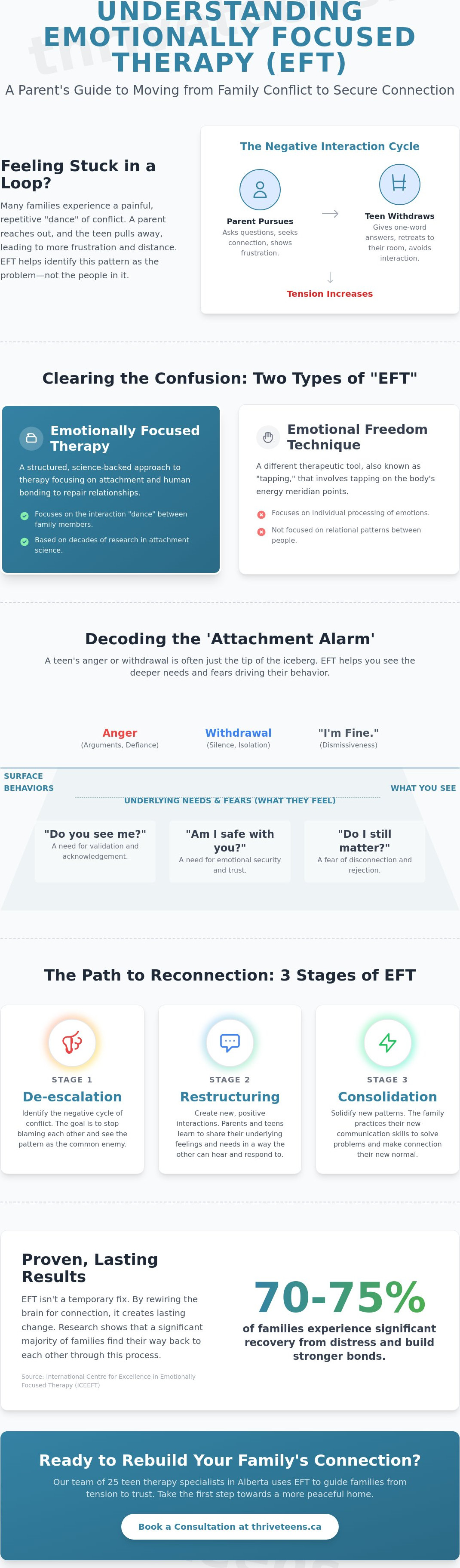
Watching your teenager retreat into their room or respond with nothing but one-word answers is a painful experience for any parent. You want to help, but every attempt to reach out seems to trigger an argument or deeper silence. It feels like you are losing the person you know best. Many families in Edmonton experience this disconnect, feeling stuck in a cycle of frustration and hurt. When you start searching for ways to bridge that gap, you will likely ask: what is eft? Emotionally Focused Therapy (EFT) is a structured, short-term approach to therapy that relies on the science of human bonding, known as attachment science. It's important to distinguish this clinical model from the "tapping" technique, or Emotional Freedom Technique, which shares the same acronym. The model used by our Edmonton therapists is a rigorous psychological framework. For those interested in the academic origins and clinical validation of this approach, you can read more about Emotionally Focused Therapy on Wikipedia.To better understand this concept, watch this helpful video:
In EFT, we don't look for a "bad guy" in the family. Instead, we focus on the "dance." This refers to the repetitive patterns of interaction where a parent might push for answers and a teen might pull away. These steps become a habit that leaves everyone feeling exhausted. By identifying these patterns, we stop blaming individuals and start working together to change the rhythm of the relationship.The Core Philosophy: Why Emotions Matter
Emotions serve as a vital compass for our needs and safety. When a teen displays anger or defiance, it's often a surface-level signal of a deeper need to feel seen or secure. We focus on building a "secure attachment," which is the essential foundation for a teenager's mental health and resilience. EFT is a map for moving from distress to a secure, lasting bond.
Our team of 25 teen therapy specialists understands how to guide families through these difficult transitions. If you're ready to stop the cycle of conflict, exploring family counselling can provide the practical tools you need to reconnect.
How EFT Works: From 'Attachment Alarms' to Connection
When your teen slams their bedroom door or responds with a sharp "I'm fine," it's natural to feel rejected or frustrated. In these moments, your child's brain is often triggering what we call an attachment alarm. This isn't just teenage moodiness; it's a biological distress signal that screams for safety and connection. To truly understand what is eft, you have to see these behaviors as a desperate attempt to feel secure when they feel misunderstood. Our specialists help you move past the surface anger to find the vulnerable child underneath.
According to the What is Emotionally Focused Therapy? framework, families often get stuck in a "negative cycle." This is a predictable push-pull dynamic where one person pursues while the other withdraws. EFT breaks this cycle through three specific stages:
- De-escalation: We help you identify the cycle and realize that the pattern, not your teen, is the enemy.
- Restructuring: We guide parents and teens to share their hidden fears and needs in a way the other can actually hear.
- Consolidation: You practice these new ways of connecting until they become your family's new normal.
Research from the International Centre for Excellence in Emotionally Focused Therapy indicates that 70% to 75% of families moving through this process experience significant recovery from distress. These results aren't just temporary. They last long after sessions end because the brain actually rewires for connection.
EFT for Families (EFFT)
Our team adapts this model specifically for the unique pressures facing families in Alberta. By integrating child psychology principles, we help you become the secure base your teen needs. This early intervention is vital for helping anxious youth feel grounded and safe. You can meet our Edmonton therapists to see how we can help your family find its footing again.
The Science of the Teen Brain
The adolescent brain is a work in progress, balancing a fierce need for autonomy with an equal need for belonging. When a teen has teen ADHD, the emotional friction can feel even more intense. EFT supports neurodiverse youth by reducing the shame often associated with executive function struggles. We teach you what is eft in practice: a way to lower the emotional volume so your teen can thrive instead of just surviving.
What to Expect in an EFT Session with Your Teen
Walking into a therapy room can feel heavy for both you and your child. You might wonder, what is eft going to look like for our family? It begins with a warm, initial assessment where our specialists create a soft place for you and your teen to land. We prioritize emotional safety above all else. In these first sessions, our 25 teen therapy specialists focus on understanding the "dance" of your relationship; the patterns of communication that leave everyone feeling lonely, angry, or misunderstood.
Your therapist acts as a process consultant rather than a judge or a referee. They don't take sides or look for who is to blame. Instead, they help you identify the negative cycles that keep you stuck. You will practice "enactments," which are guided, heart-to-heart conversations. These allow you to share your fears and needs in a structured, supported way. According to Psychology Today's guide to EFT, this approach focuses on the emotional bond rather than just managing behaviors. Our goal isn't to "fix" your teen; it's to heal the connection so you can face life's hurdles as a team.
Is EFT Right for My Family?
If you find yourselves trapped in constant arguing, or if your teen is "shutting down" and withdrawing, EFT can help. It's also highly effective during major life transitions in Edmonton, like a divorce or a move. You might worry, "What if my teen refuses to talk?" Our therapists are experts at building safety. They know how to gently lower defenses so even the most reluctant teen feels heard and understood. To find the right fit for your family's needs, you can read our guide on how to choose the best therapist in Edmonton.
Finding EFT Support in Edmonton and Alberta
Searching for the right therapist can feel like a heavy task when your family is already in a place of hurt. You want to know that the person sitting across from your teen truly understands the weight of your experience. Understanding what is eft is a powerful first step, but finding a compassionate guide is where the real healing begins. Here is how you can start moving toward a more connected home.
- Step 1: Verify Training. Look for Registered Psychologists or Social Workers in Alberta who have specific training in EFT. This ensures they have the clinical tools to handle deep emotional cycles and "soften" the conflict in your home.
- Step 2: Prioritize the Connection. Book an initial consultation. The "vibe" is everything. If your teen doesn't feel safe and seen during the first meeting, the therapeutic work won't be as effective.
- Step 3: Stay Consistent. EFT is most effective when families attend sessions regularly. Healing takes time; research into family dynamics suggests that consistent weekly or bi-weekly sessions create the most stable long term improvements.
- Step 4: Practice at Home. Therapy doesn't end when you leave the office. Try to use the "softened" communication skills you learn in session during Tuesday night dinner or car rides.
Local Support at Thrive Teen Therapy
At Thrive, our team of 25 specialists is dedicated to helping youth and families do more than just get by. Our Edmonton therapists and Sherwood Park specialists love working with youth. We provide a neurodiverse-affirming and LGBTQ2S+ safe space where every teen feels immediate acceptance. We know how to lower the defenses of even the most guarded teenager.
If you live outside the capital region, our virtual options ensure families across Alberta have access to expert care regardless of their location. We are here to be your steady hand. You don't have to navigate these difficult years alone. Reach out today to see how our specialists can support your family's journey toward wellness.
Take the Next Step Toward a Deeper Connection
Parenting a teenager often feels like navigating a storm without a map. It's painful to watch your child struggle with big emotions while feeling like you're losing the connection you once had. By exploring what is eft, you've taken a vital first step toward reclaiming that bond. This approach doesn't just manage behaviors; it calms the attachment alarms that cause distance and creates a secure base for your teen to grow. When families understand the emotional needs beneath the surface, they can move from constant friction to genuine understanding and long-term healing.
At Thrive Teen Therapy, our team of 25+ teen therapy specialists is here to guide your family through this process. We provide specialized LGBTQ2S+ and neurodiverse-affirming care in a space where every teen feels truly seen and heard. Whether you prefer in-person sessions in Edmonton or Sherwood Park, we offer the professional expertise and empathetic warmth needed to move from surviving to thriving. You don't have to navigate this journey alone. We're ready to help your family find its way back to each other with confidence and clarity.
Meet our Edmonton EFT specialists and book a free consultation today.
Frequently Asked Questions
Is EFT the same as 'tapping'?
No, these are two very different therapeutic approaches. Emotionally Focused Therapy (EFT) is a scientifically validated method based on attachment theory, while the "tapping" technique is an energy psychology tool. When you ask what is eft in a clinical setting, we're referring to a structured process that helps families identify negative cycles and build secure emotional bonds. If you're looking for deep, lasting connection, our 25 Teen Therapy Specialists use the EFT model to help you understand the specific needs behind your teen's behavior.
How many sessions of EFT does it usually take to see a difference?
You can typically expect to see a measurable difference within 8 to 20 weekly sessions. While every family's journey is unique, research from the International Centre for Excellence in Emotionally Focused Therapy shows that 75% of families move from distress to recovery using this structured approach. We start by de-escalating conflicts so you can feel immediate relief at home. To begin this process, you can book a session online and start working toward a more peaceful household today.
Can EFT help with my teen's anxiety or depression?
Yes, EFT is highly effective for treating teen anxiety and depression by addressing the root cause of emotional isolation. When a teen feels disconnected or misunderstood, their symptoms often intensify. Our specialists use the EFT framework to create a safe space where your teen feels truly heard, which significantly reduces the weight of their internal struggles. You can explore our specialized services to see how we tailor what is eft to help your teen overcome these heavy emotions and build resilience.
Does insurance in Alberta cover EFT therapy?
Most private insurance plans in Alberta cover EFT when a Registered Psychologist or Registered Social Worker provides the service. Since we have a team of 25 specialists, we likely have a professional who fits your specific benefits package. We recommend checking your policy for "psychological services" coverage to confirm your yearly limits. If you need assistance, our administrative team can provide the necessary receipts for your reimbursement claims with providers like Alberta Blue Cross, Sun Life, or Manulife.
What if only one parent can attend the sessions?
You can still make significant progress even if only one parent is available to attend. While having both parents present is ideal for understanding the full family dynamic, a single parent can learn to respond to their teen in ways that shift the entire home environment. This proactive step helps break negative cycles and fosters a sense of safety for your child. You can meet our team to find a therapist who specializes in supporting parents through these complex family transitions.