
Imagine watching your teen startle at the smallest sound or struggle with a persistent, heavy fatigue that sleep just can't fix. It's heartbreaking to see them stuck in a state of constant hypervigilance, where their body treats every everyday stressor like a major threat. If you've been searching for teen trauma counselling Edmonton, you likely know that traditional talk therapy doesn't always reach the deep, physical roots of this distress. You aren't alone in feeling helpless as your child retreats behind a wall of "survival mode" and unexplained physical aches.
It's exhausting to feel like you're constantly walking on eggshells while your teen's nervous system remains in a state of high alert. You'll discover how specialized trauma support and Pain Reprocessing Therapy can help your teen finally feel safe in their own skin and move from just surviving to truly thriving. We'll explore how retraining the brain's interpretation of safety signals can reduce trauma-induced pain and restore emotional balance at home and school, providing your family with a clear path toward lasting wellness.
Key Takeaways
- Understand how trauma can manifest as "neuroplastic pain," where your teen's brain mistakenly signals danger even when they are physically safe.
- Learn how Pain Reprocessing Therapy (PRT) uses the power of neuroplasticity to retrain the brain and reduce chronic physical distress by calming fear.
- Discover how specialized teen trauma counselling Edmonton creates a non-judgmental space for your child to move from survival mode to holistic growth.
- Identify actionable steps to help your teen regulate their emotions and find relief from trauma-induced physical pain through an integrated care model.
Understanding Teen Trauma and Its Physical Toll on the Body
It’s deeply unsettling to watch your teen struggle with physical ailments that don't seem to have a clear medical cause. You might notice them complaining of frequent tension headaches, persistent stomach upset, or a level of fatigue that doesn't lift with rest. These "unexplained" symptoms are often the body's way of speaking when words feel like too much. When a young person experiences Psychological trauma, the nervous system can become stuck in a loop. This often leads to neuroplastic pain, a condition where the brain begins to misinterpret safe signals from the body as dangerous ones, creating real physical pain as a false alarm.
To better understand this concept, watch this helpful video:
This physical toll directly impacts what is emotional regulation in the developing teen brain. When the body is under constant stress, the "thinking" part of the brain often goes offline, making it nearly impossible for your teen to manage their moods or reactions. These physical "trauma echoes" are signs that their system needs more than just a listening ear; it needs a way to feel safe again. Seeking specialized teen trauma counselling Edmonton can help bridge the gap between their physical discomfort and their emotional healing.
The "Survival Mode" Loop in Alberta Teens
Hypervigilance is an exhausting state where the nervous system stays on high alert, scanning for threats that aren't there. For many Alberta teens, this "survival mode" becomes their default setting. Traditional talk therapy sometimes misses this because it focuses on the mind, while the trauma is actually "stuck" in the body's tissues and neural pathways. Without addressing this physical stuckness, your teen may feel like they're just rehashing the past without actually finding relief.
Recognizing the Signs Your Teen Needs Trauma-Specific Support
Trauma doesn't always look like a loud outburst. Sometimes it’s a quiet withdrawal or a sudden drop in grades that doesn't make sense. You might notice:
- Sudden hyperindependence or refusing to ask for help.
- Social withdrawal from friend groups at school.
- Increased sensitivity to localized stressors, like the high-pressure academic environment in Edmonton schools.
If these patterns feel familiar, our Edmonton therapists are here to help your family find a way forward. You don't have to navigate this helplessness alone.
What is Pain Reprocessing Therapy (PRT) for Teens?
Watching your teen struggle with persistent pain after a traumatic event is overwhelming. You want to fix it, but traditional medical treatments often focus only on the physical site of the hurt. Pain Reprocessing Therapy (PRT) offers a different path by addressing the root cause in the nervous system. PRT is a neuroplasticity-based approach to eliminating chronic pain by reducing fear. It uses a system of psychological techniques that retrain the brain to interpret safe signals correctly. This is vital for adolescents because their bodies often stay in a high-alert state long after a traumatic event has passed.
Teen trauma counselling Edmonton often involves more than just processing memories; it requires addressing how the body holds onto those memories as physical sensations. While traditional pain management might suggest rest or medication, PRT helps the brain realize that the "danger" is over. A landmark randomized clinical trial on PRT demonstrated that by changing how the brain perceives pain, patients experienced significant and lasting relief. This methodology is particularly effective for teens because their systems are still highly adaptable.
The Science of Neuroplasticity and Healing
The teen brain is uniquely "plastic," meaning it's in a peak stage for rewiring and growth. This makes it the perfect time for recovery. A core component of this work is Somatic Tracking. Through this gentle practice, teens learn to observe physical sensations with curiosity rather than fear. When they can look at a sensation without the old "danger" alarm going off, the neural pathways for pain begin to weaken. It’s a process of teaching the brain that it's finally safe to let go of the physical armor it has been carrying.
Why PRT is a Game-Changer for Teen Trauma Counselling
When a teen is in constant physical distress, they don't have the emotional energy to talk about their feelings. By reducing the "fear-pain cycle," we clear the way for deeper healing. This integrated approach is a cornerstone of our teen therapy in Alberta, ensuring we treat the whole person, not just the symptoms. If you're curious about how this approach might help your child, you can meet our Edmonton therapists to learn more about our specialized methodology.
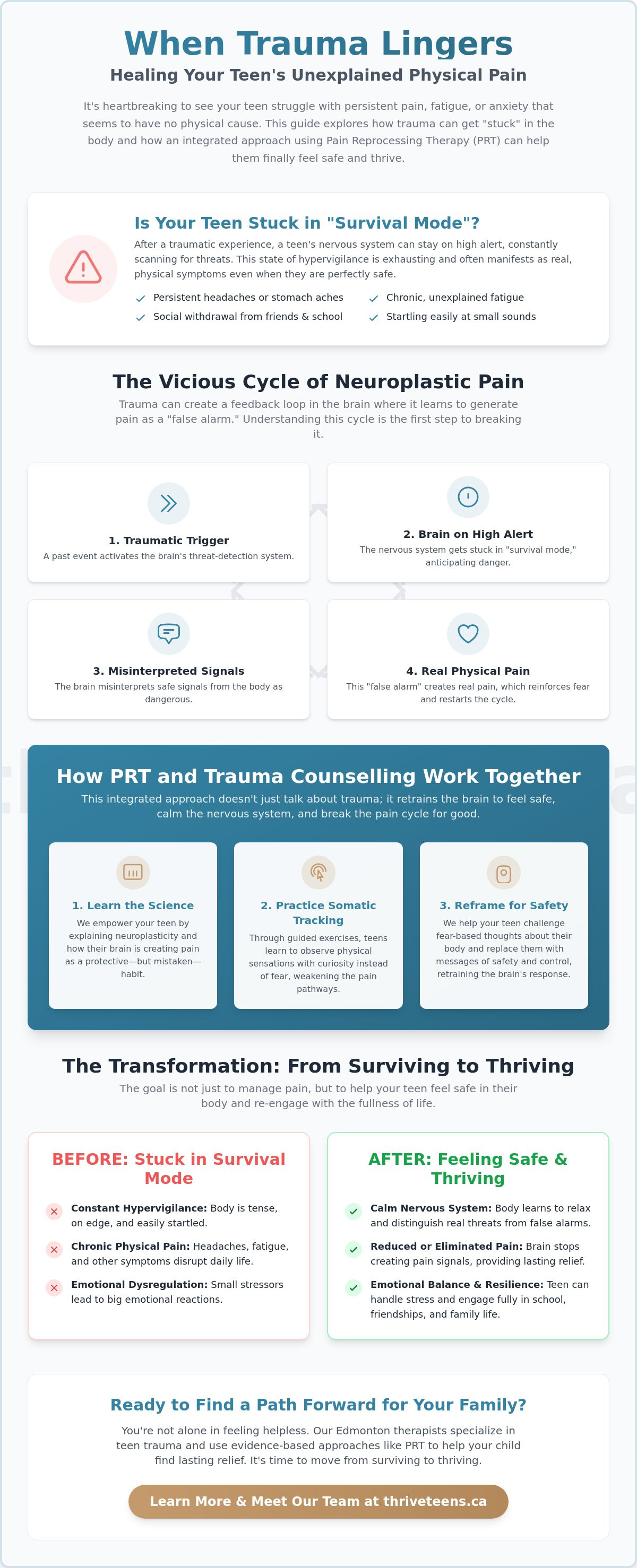
How PRT and Trauma Counselling Work Together: A Step-by-Step Guide
It can feel like a heavy weight is lifted when you finally understand why your child is hurting. At Thrive Teen Therapy Alberta, we believe that healing happens best when we treat the mind and the body as one connected system. When we combine Pain Reprocessing Therapy with trauma-informed care, we address the biological "stuckness" while also holding space for the emotional story your teen needs to tell. Our approach to teen trauma counselling Edmonton focuses on creating a warm, non-judgmental environment where your teen feels safe enough to lower their defenses and begin the work of recovery.
Family involvement is a vital part of this journey. You aren't just an observer; you are a co-regulator for your teen’s nervous system. We help parents learn how to support their child’s progress without overstepping or accidentally reinforcing the fear that keeps pain alive. This collaborative effort ensures that the progress made in the therapy room translates to a more peaceful and connected home life. To start this process, you can meet our Edmonton therapists who specialize in these integrated modalities.
The 3 Phases of Trauma-Informed PRT
- Step 1: Education. We demystify the experience by explaining the brain-pain connection. When a teen understands that their pain is a "false alarm" rather than structural damage, their fear begins to decrease.
- Step 2: Somatic Tracking. Your teen learns to observe physical sensations through a lens of safety. They practice "leaning in" to the sensation with curiosity, which helps rewire the brain’s response.
- Step 3: Addressing Emotional Danger. We identify and process the underlying "danger" signals, such as teen anxiety or past traumatic memories, that keep the body in a state of high alert.
Actionable Steps for Parents at Home
You can help your teen practice safety at home by changing how you respond to their physical distress. Instead of focusing on the severity of the pain, try using a validation script like this: "I can see that you're hurting, and I'm right here with you. Your body is doing its best to keep you safe, even if it feels uncomfortable right now." This acknowledges their reality without adding to the alarm.
You can also suggest "safety anchors" during high-stress moments. These are simple tools to ground the nervous system, such as using a weighted blanket for deep pressure or focusing on a specific, calming scent. These small acts of co-regulation help your teen move out of survival mode and back into a state of growth. If you're ready to see your teen flourish again, connect with our specialist team today to discuss a tailored plan for your family.
Finding the Right Teen Trauma Support in Edmonton and Area
Choosing a therapist for your child is a deeply personal and often overwhelming decision. You're looking for someone who possesses the clinical expertise to handle complex trauma, but you also need a professional who can truly connect with your teen’s unique personality. We recognize the immense courage it takes to reach out for teen trauma counselling Edmonton. You aren't just seeking a medical service; you're looking for a reliable ally who will stand by your family as your teen begins to feel safe in their body once again.
The value of a large, specialized team like Thrive Teen Therapy Alberta lies in our ability to find the "perfect fit" for your child. We don't believe in a one-size-fits-all approach to mental health. Instead, we carefully match teens with specialists who align with their specific needs and interests. Whether your family prefers the connection of in-person sessions in Edmonton or the accessibility of virtual therapy across Alberta, our goal remains the same. We want to help your teen move beyond just "coping" with their symptoms so they can begin thriving in their school life, their friendships, and their future.
Navigating the Path to Recovery Together
Our intake process is designed to be supportive and straightforward, reducing the stress often associated with finding teen trauma counselling Edmonton. We focus on understanding the specific hurdles your teen is facing, from unexplained physical pain to emotional withdrawal. If your family is currently dealing with a significant loss alongside trauma, you may find it helpful to review our guide on navigating the 7 stages of grief. This resource provides a gentle framework for understanding the complex emotions that often accompany a traumatic experience.
Your Next Steps for Healing
Healing doesn't happen overnight, but it does begin with a single, brave step forward. We encourage you to reach out for an initial consultation to lower the barrier to entry and explore how our trauma-informed specialists can help. This is a low-pressure opportunity to learn more about our integrated care models and how they can benefit your child. Your teen deserves to feel safe, empowered, and ready to embrace life again. Connect with our specialized trauma team today to find the right partner for your teen's journey toward wellness.
Empowering Your Teen to Flourish Again
Seeing your teen move from a state of constant alarm to one of safety is the ultimate goal of the work we do. You now understand that trauma often leaves a physical footprint, manifesting as "unexplained" pain or fatigue that traditional methods may overlook. By utilizing Pain Reprocessing Therapy, we help your child's brain retrain its safety signals, effectively silencing the false alarms of the nervous system. This integrated approach ensures we aren't just managing symptoms but are fostering lasting resilience and emotional regulation.
When you seek out specialized teen trauma counselling Edmonton, you're connecting with a team that focuses exclusively on the adolescent experience. Our warm, non-judgmental clinicians in Edmonton and Sherwood Park possess the specific expertise in PRT required to help your teen feel safe in their body once more. You don't have to carry this burden of helplessness alone. We invite you to book a consultation with our Edmonton teen trauma specialists today. There is a path forward, and we're honored to walk it with your family as your teen begins to truly thrive.
Frequently Asked Questions
Is Pain Reprocessing Therapy (PRT) safe for younger teenagers?
Pain Reprocessing Therapy is safe for younger teenagers because it's a non-invasive, psychological approach that focuses on creating a sense of safety within the body. Instead of using forced exposure, it employs gentle observation to help your child realize their brain is over-reporting danger signals. Our specialists adapt these techniques to match the developmental level of younger teens, ensuring they feel supported rather than overwhelmed during their recovery journey.
How many sessions of trauma counselling does a teen typically need?
The number of sessions required for teen trauma counselling Edmonton depends on the complexity of your child's experience and their unique pace of healing. Many families begin to notice positive shifts in emotional regulation and physical comfort within 8 to 12 sessions. We focus on a goal-oriented approach that prioritizes your teen’s comfort, moving from immediate symptom relief toward holistic growth and long-term flourishing in their daily life.
Can PRT help with trauma symptoms even if my teen doesn’t have chronic pain?
PRT can be highly effective for trauma even if your teen doesn't experience chronic pain, as it addresses underlying nervous system hypervigilance. Many teens carry trauma as "somatic anxiety," which might feel like a racing heart, tight chest, or constant restlessness. By retraining the brain to interpret these safe physical signals correctly, your teen can lower their overall stress levels and feel much more grounded in their body again.
What is the difference between PRT and EMDR for teen trauma?
The primary difference is that EMDR focuses on processing traumatic memories, while PRT focuses on retraining the brain's interpretation of physical sensations and safety signals. While EMDR helps resolve the mental "stuckness" of a past event, PRT is specifically designed to address the physical "stuckness" of chronic pain or somatic distress. Both are valuable tools, and our team often integrates various modalities to provide the most comprehensive care for your family.
How do I know if my teen’s physical symptoms are actually related to trauma?
You can often identify trauma-related physical symptoms by observing if they flare up during times of emotional stress or if medical doctors find no structural cause for the discomfort. Symptoms like persistent headaches, stomach issues, or fatigue that appear after a difficult event are common "trauma echoes." If you're unsure, our therapists can help you navigate this during an initial consultation, ensuring your teen receives the right specialized support for their specific situation.