

Imagine your teen is sitting at the dinner table, but their mind is miles away, trapped in a loop of a past event they can't escape. You've likely tried traditional talk therapy for months, yet the same triggers still cause the same emotional storms. It's heartbreaking to feel like you're losing your child to memories that won't fade. You aren't alone in wondering what is emdr and if this "eye movement" approach is actually effective for your teen's specific needs.
The World Health Organization (WHO) formally recognized EMDR as a frontline treatment for trauma in 2013 because it changes how the brain stores painful memories. We understand that you want a solution that works effectively and safely to help your child feel like themselves again. This guide explains how EMDR therapy helps Alberta teens "unstick" traumatic memories to find true emotional balance. We'll walk through the science of the process, explain why it's a gold-standard option for youth, and show you how to connect with one of our 25 teen therapy specialists in Edmonton or Sherwood Park.
Key Takeaways
- Understand how traumatic memories can act like an "emotional splinter" and learn how a structured therapy approach helps your teen's brain finally process and release these stuck experiences.
- Discover why the first phases of treatment focus entirely on building safety and coping skills, ensuring your teen feels supported by a steady hand before ever touching on difficult memories.
- Learn why this science-backed method is a game-changer for neurodiverse youth and those struggling with teen ADHD, offering a powerful alternative to traditional talk therapy.
- Gain clarity on what is emdr and how it effectively treats more than just PTSD, helping Alberta teens overcome social anxiety, phobias, and teen self-harm.
- Follow practical, step-by-step guidance on how to find a qualified EMDR specialist in Edmonton or Sherwood Park who specifically focuses on the unique needs of adolescents.
Understanding EMDR: More Than Just Eye Movements
Watching your teen struggle with past hurts can feel like watching them fight an invisible ghost. You see them react with intense anger, sudden tears, or total withdrawal to things that seem small to others. For your child, the past isn't over; it's still happening in their body. Eye Movement Desensitization and Reprocessing (EMDR) is a structured therapy designed to help the brain finally process these "stuck" memories. When we ask what is EMDR, we are looking at a path that moves a teen from just surviving to truly thriving.
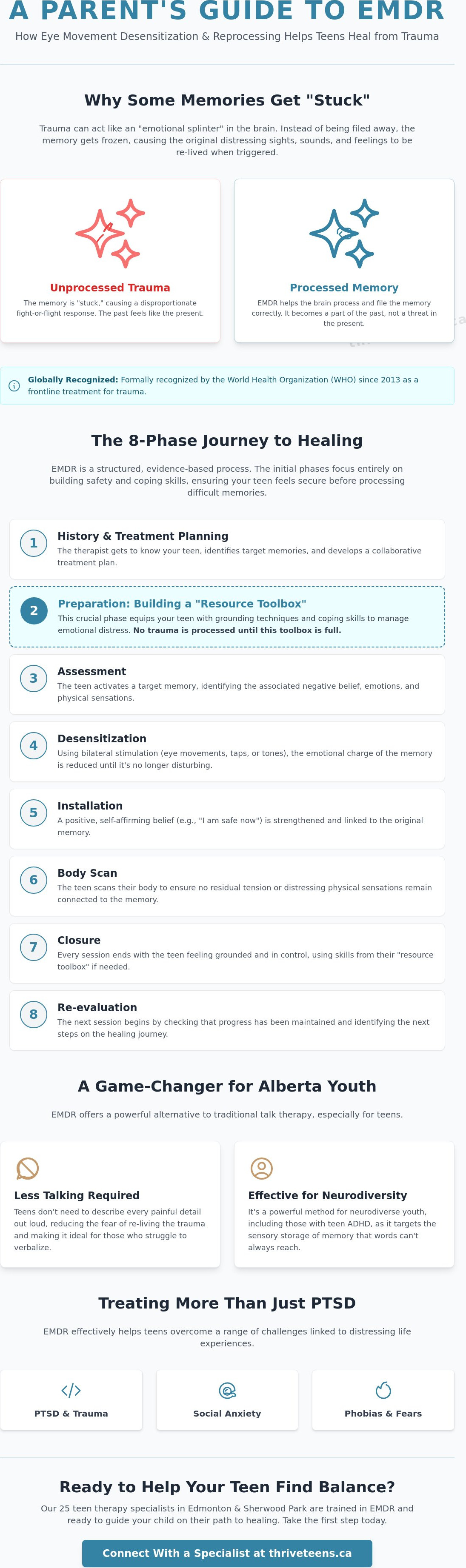
Think of trauma as an emotional splinter. If a physical splinter stays in the skin, the area becomes inflamed, sensitive, and painful to the touch. EMDR doesn't just mask that sensitivity; it gently removes the splinter so the body can begin its natural healing process. This approach is a non-invasive, evidence-based practice recognized by global health authorities like the World Health Organization. For a comprehensive overview of EMDR and its history, it's helpful to see how it has become a gold standard for trauma care worldwide.
Globally, specialized centers like the New Paradigm Mental Health Retreat demonstrate how these evidence-based techniques can be part of a comprehensive approach to mental health and trauma recovery, offering inspiration for the level of care available to those seeking deep healing.
To better understand this concept, watch this helpful video:
The Science of "Unsticking" the Young Brain
EMDR is built on the Adaptive Information Processing (AIP) model. This sounds complex, but it simply means our brains are naturally wired to move toward mental health. However, traumatic events can get "frozen" in the nervous system with their original sights, sounds, and distressing feelings. When your teen is triggered, they are literally re-living those frozen moments. Unlike traditional talk therapy, which focuses on the logic of what happened, EMDR targets the sensory storage of the memory. While "talking it out" has its place, it often isn't enough for deep-seated trauma because the "stuck" feeling lives in a part of the brain that words can't always reach.
Is EMDR safe for children and teenagers?
Safety is the primary concern for any parent, and we want to reassure you that what is EMDR for a teen is a very safe, adaptable process. It's often more comfortable than traditional methods because teens don't necessarily need to describe every painful detail of their trauma to find relief. This reduces the fear of re-living the event out loud. Our 25 teen therapy specialists are experts at pacing sessions to your teen’s specific comfort level. We ensure they have the tools to feel grounded before we ever begin the reprocessing work, making the path to healing feel secure and supported.
The 8 Phases of EMDR: What Your Teen Can Expect
Understanding the structure of therapy helps lower the anxiety parents often feel when seeking help for their child. Our specialists guide your teen through a structured 8-phase journey, moving from history-taking to final re-evaluation with a steady hand. This isn't a process that rushes into painful memories. The first few sessions are entirely about building safety and coping skills. We never jump straight into trauma. Instead, it's a careful process standardized by the EMDR International Association to ensure every step prioritizes your teen’s safety and emotional stability.
When exploring what is emdr, it's helpful to see it as a roadmap rather than a single event. During the middle phases, we use bilateral stimulation. This might involve guided eye movements, gentle hand taps, or rhythmic tones. These tools help your teen keep one foot in the present while they process the past. The ultimate goal is desensitization. This means we work to reduce the emotional charge of a memory until it no longer hurts or triggers a "fight or flight" response. By learning what is emdr and how its phases work, you can better support your teen's transition from past pain to future confidence.
Preparation and Building a "Resource Toolbox"
Before any trauma is addressed, we focus on Phase 2. This is where your teen builds a "resource toolbox" filled with grounding techniques like the "Safe Place" visualization or the "Container" exercise to manage big feelings. Resourcing is the process of strengthening a teen’s internal resilience before processing difficult memories. If your teen is already struggling with daily stressors, this phase often links closely with teen anxiety support to ensure they feel capable and calm throughout the process.
The Reprocessing Session: A Typical Experience
In our Edmonton or Sherwood Park offices, a reprocessing session feels calm and supportive. The therapist guides your teen to notice thoughts, physical sensations, or images that arise without judgment or "forcing" a specific result. Your teen stays in the driver's seat the entire time. They are always in control and can stop the process at any second. This sense of agency is vital for healing from experiences where they may have felt powerless. If you're curious about how our team approaches this, you can meet our Edmonton specialists who love working with youth to help them move from surviving to thriving.
Why EMDR is a Game-Changer for Alberta Youth
Watching your teen struggle with heavy emotions is heartbreaking. You want them to feel like themselves again, but traditional talk therapy can sometimes feel like a slow climb for a young person. This is where understanding what is emdr becomes vital for Edmonton families. It isn't just for major accidents or disasters. We use it to treat social anxiety, deep-seated phobias, and teen self-harm by processing the underlying distress that fuels these behaviors.
One of the biggest benefits is the speed of relief. Evidence regarding the EMDR procedure and its effectiveness shows that many people experience significant shifts in fewer sessions than traditional methods. For a busy Alberta teen balancing competitive sports and high academic expectations, this efficiency is essential. It's also a powerful tool for those with teen ADHD. Since EMDR relies less on verbal storytelling and more on biological processing, it's often more accessible for neurodiverse brains that find "just talking" frustrating or exhausting.
Addressing Modern Teen Challenges
Our specialists use EMDR to help youth navigate complex identity-based trauma. This is especially true for LGBTQ2S+ youth in Edmonton who may carry the weight of rejection or bullying. We also provide culturally safe, affirming support for Indigenous youth through NIHB-funded therapy in Edmonton. The goal is to "re-wire" the painful core beliefs that take root during these experiences. Instead of a teen thinking "I am not good enough" or "I am in danger," we work together so they can truly believe "I am capable and safe."
How to Talk to Your Teen About Starting EMDR
Starting something new can feel intimidating for a teenager. If you're wondering how to explain what is emdr to your child, try using a simple analogy. You might say: "It’s like cleaning out a computer file that keeps crashing. This therapy helps your brain organize those 'glitchy' memories so they don't cause problems anymore."
- Watch together: Spend five minutes watching a short, age-appropriate video on EMDR to de-mystify the "eye movements" before the first session.
- Focus on thriving: Emphasize that this isn't about being "broken." It's a way for them to thrive and enjoy their life again, rather than just surviving the day.
- Keep it low pressure: Remind them that they don't have to talk about every painful detail out loud for the treatment to be effective.
Our team understands the unique pressures facing local youth. You can connect with an Edmonton EMDR specialist today to see if this approach is the right fit for your family's journey toward healing.
Finding an EMDR Specialist in Edmonton & Sherwood Park
When your teenager is struggling with the weight of past experiences, finding the right support feels like an urgent mission. You don't just need a therapist who understands the mechanics of what is emdr; you need a professional who truly loves working with youth. A generalist might treat adults and teens the same way, but the adolescent brain is still developing and requires a specialized touch. Choosing a therapist who focuses exclusively on this age group ensures that the treatment is developmentally appropriate, engaging, and sensitive to the unique social pressures teens face today.
To find the best fit for your family, start with these practical steps:
- Verify Credentials: Ensure the therapist is a Registered Psychologist or a Registered Social Worker in Alberta.
- Ask About Youth Training: Inquire if they have completed specific EMDR training modules designed for children and adolescents.
- Book a Consultation: Use a brief call to see if their personality resonates with your teen's specific needs.
Thrive Teen Therapy acts as the bridge between your teen's current struggles and a resilient, hopeful future. Our team supports families across the province, offering high-quality care to those living in Vegreville, Beaumont, and beyond. We believe every young person deserves a space where they feel seen and heard.
In-Person vs. Virtual EMDR: Which is Right?
Many parents wonder if virtual sessions are as effective as meeting in an office. For many teenagers, the comfort of their own bedroom provides a sense of safety that makes the therapeutic process move faster. Virtual EMDR is highly effective and allows us to reach families throughout Alberta who may not have a specialist nearby. If your teen prefers a physical connection, we welcome you to our warm, inviting clinic locations in Edmonton and Sherwood Park. Before your first session, check your insurance policy for coverage under "Registered Psychologist" or "Social Work" services to help manage the investment in your child's well-being.
Your Next Steps Toward Healing
Trust your parental intuition. If your teen seems stuck in a cycle of anxiety or "big emotions" that don't seem to fade, it's likely time to try a different approach. While traditional talk therapy is valuable, understanding what is emdr can be the key to unlocking the healing your teen hasn't been able to reach through words alone. You can explore our Teen Therapy Alberta page for a comprehensive look at how we support young people across the province.
Healing is possible, and you don't have to navigate this journey by yourself. Our team is ready to provide the steady hand and expert care your family needs right now. Book a consultation with one of our 25 teen specialists today to start the path toward a brighter tomorrow.
Helping Your Teen Reclaim Their Spark
Watching your teen struggle with the heavy weight of past trauma can feel overwhelming. You've likely seen how these experiences affect their school life, friendships, and confidence. Understanding what is emdr provides a clear roadmap for change. This 8 phase approach does more than just manage symptoms; it allows the brain to heal naturally by reprocessing difficult memories. It's a powerful tool for Alberta youth who need a safe, neurodiverse-affirming space to process their world without feeling judged.
Our team of 25+ specialized teen therapy experts is here to support your family's unique journey. Whether you visit our in-person clinics in Edmonton or Sherwood Park, you'll find an LGBTQ2S+ inclusive environment where your teen is truly heard. We prioritize a steady, compassionate approach that focuses on building lasting strengths. You can take the next step today by connecting with a professional who understands the specific challenges local teens face.
Ready to help your teen move forward? Meet our specialized EMDR therapists in Edmonton and area.
Healing is possible, and your teen doesn't have to carry this burden alone. We're ready to help them thrive.
Frequently Asked Questions
Is EMDR therapy a form of hypnosis?
No, EMDR therapy is not a form of hypnosis; your teen remains fully awake, alert, and in total control during the entire process. While hypnosis often involves a trance-like state where the person is highly suggestible, EMDR uses dual-attention stimulus like eye movements to keep your teen grounded in the present moment. Our 25 Teen Therapy Specialists in Edmonton ensure your child feels safe and supported as they navigate their healing journey. If you'd like to see who might be the best fit for your family, you can meet our specialists here.
How many sessions of EMDR will my teen need before seeing results?
Most teens begin to experience a noticeable shift in their emotional distress within 6 to 12 weekly sessions, though complex histories may require more time. Research from the EMDR International Association shows that 84% to 90% of single-trauma victims no longer have PTSD symptoms after only three 90-minute sessions. We focus on your teen’s specific rhythm to ensure they don't feel rushed or overwhelmed. You can explore our trauma support services to see how we structure these sessions for Edmonton families.
Can EMDR make my teen’s symptoms worse before they get better?
It's common for teens to feel more emotional or physically tired immediately after a session as their brain continues to process memories. This "processing effect" is a natural sign that the brain is doing the hard work of healing and reorganizing information. To manage this, our therapists spend the first 2 sessions teaching specific grounding tools so your teen feels empowered to handle big feelings at home. If you're worried about your teen's current coping skills, we recommend checking our team page to find a therapist who specializes in crisis stabilization.
What is the difference between EMDR and regular talk therapy for teens?
When parents ask what is emdr compared to talk therapy, the main difference is how the brain processes information. Talk therapy focuses on verbalizing thoughts and behaviors, while EMDR targets how the brain stores traumatic memories using bilateral stimulation. This approach is often faster for trauma because it doesn't require the teen to describe every painful detail out loud. It's an excellent option for neurodiverse youth who might find traditional conversation-based therapy exhausting or frustrating.
Does insurance in Alberta cover EMDR therapy sessions?
Most private insurance providers in Alberta, such as Alberta Blue Cross, Sun Life, or Manulife, cover these sessions when provided by a Registered Psychologist. Since EMDR is a recognized clinical treatment, it typically falls under your standard mental health or psychological services benefits. We suggest calling your provider to confirm your specific coverage limits for "psychological services" before your first appointment. Our administrative team in Edmonton provides detailed receipts with all the necessary licensing numbers for your easy reimbursement.
Can EMDR help with teen ADHD or just trauma?
EMDR is highly effective for more than just trauma; it helps approximately 60% of neurodiverse teens manage the emotional dysregulation and "rejection sensitivity" often linked to ADHD. By processing past school failures or social frustrations, your teen can build a more resilient and confident self-image. This specialized approach allows them to move from just surviving their daily routine to truly thriving in their social and academic lives. Reach out to our ADHD specialists to learn how we integrate these tools for better focus and calm.