
Last Tuesday, you watched your teen stare at a single page of math homework for two hours, their eyes filled with a frustration that broke your heart. They aren't trying to be difficult. They're simply exhausted from fighting a brain that won't cooperate. You've likely spent months wondering if you're doing something wrong or if the school system is just too overwhelmed to help. It's incredibly draining to see your child feel like a failure while you navigate the confusion of long waitlists and conflicting advice.
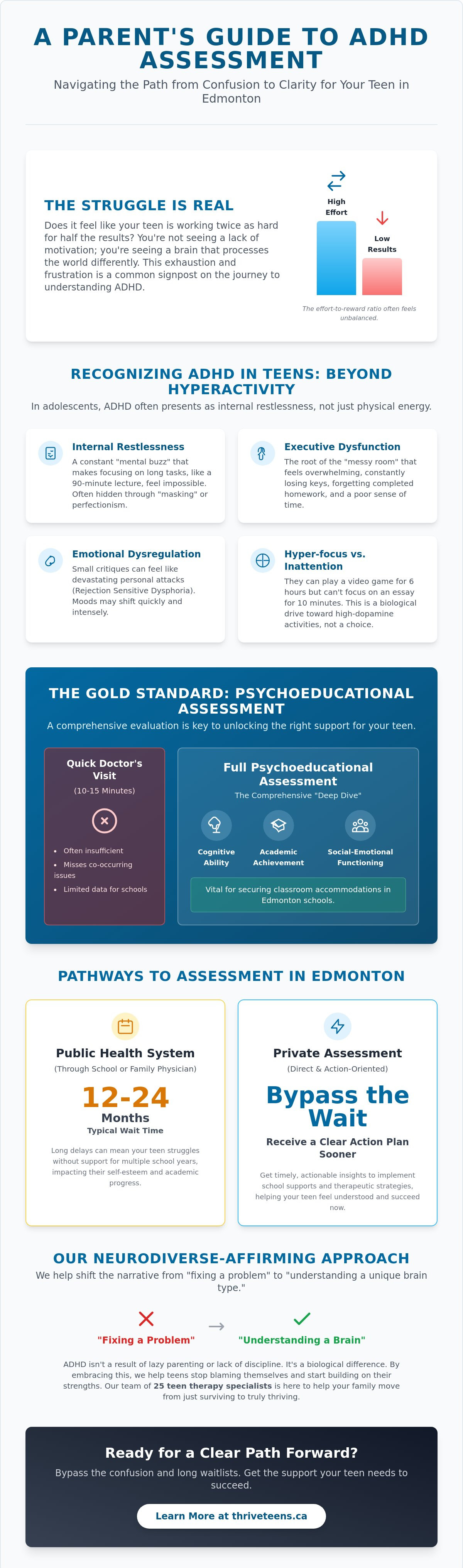
You deserve a clear path forward that doesn't involve guessing. This guide provides a compassionate, step-by-step roadmap on how to get tested for adhd in Edmonton. We'll help you find the right support for your teen while bypassing the 12 to 24 month wait times often found in the public health system. You'll learn the vital differences between school-based and private psychoeducational assessments. We'll also provide actionable steps to help your teen finally feel understood and succeed in the classroom. Our team of 25 teen therapy specialists is here to ensure your family moves from just surviving to truly thriving.
Key Takeaways
- Understand why your teen may feel they are working twice as hard for half the results and learn to recognize the internal restlessness that often signals adolescent ADHD.
- Discover the step-by-step process of how to get tested for adhd in Alberta, focusing on the psychoeducational assessment as the gold standard for your teen's success.
- Explore three local pathways to an assessment in Edmonton, including how to advocate for your child within the public school system and through your family physician.
- Gain clarity on how to turn assessment results into a compassionate action plan, from implementing school-based supports to navigating the conversation around medication.
Recognizing the Signs: Is it ADHD or Teenage Growing Pains?
You’ve likely watched your teenager sit at the kitchen table for hours, staring at a single page of math homework while the rest of the world moves on. It feels like they’re working twice as hard for half the results of their peers. This cycle of effort and exhaustion is a common experience for families in Edmonton. You aren't seeing a lack of motivation; you're seeing a brain that processes the world differently. Understanding these subtle signs is the first step in learning how to get tested for adhd in Alberta.
While younger children often show physical hyperactivity, adolescents usually experience an internal restlessness. It feels like a "mental buzz" that makes sitting through a 90 minute high school lecture feel nearly impossible. For many students in the Edmonton Public or Catholic school systems, this struggle is hidden through "masking." High achieving students and girls, in particular, often use perfectionism or social mimicry to hide their symptoms. They might maintain a high GPA, but the emotional cost includes chronic teen anxiety and a plummeting sense of self-esteem.
To better understand this concept, watch this helpful video:
Research into Attention-Deficit Hyperactivity Disorder shows that it affects approximately 5% to 9% of Canadian youth. When you begin looking into how to get tested for adhd, it's helpful to look past surface behaviors and observe the underlying patterns of executive function. If your teen is constantly losing their keys, forgetting transit passes, or melting down over small changes in plans, they may need specialized Teen ADHD support.
Common Symptoms in Teens and Young Adults
- Executive dysfunction: This includes a "messy room" that feels insurmountable, losing homework that was already completed, and a total loss of time awareness.
- Emotional dysregulation: Teens may experience "Rejection Sensitive Dysphoria," where a small critique from a teacher feels like a devastating personal attack.
- Hyper-focus vs. Inattention: It's confusing when a teen can play a complex video game for six hours but can't focus on an essay for ten minutes. This isn't a choice; it's a biological drive toward high-dopamine activities.
The 'Expert Caregiver' Perspective on Neurodiversity
At Thrive Teen Therapy, we believe in shifting the narrative from "fixing a problem" to "understanding a brain type." ADHD is a biological difference in how the brain's reward system and frontal lobe communicate. It isn't a result of "lazy" parenting or a lack of discipline. When we embrace a neurodiverse-affirming approach, we help teens stop blaming themselves for their struggles. If you have younger children showing similar patterns, exploring child psychology can help you build a supportive environment for the whole family early on. Our 25 teen therapy specialists are here to help your family move from survival mode into a space where your teen can truly thrive.
What is a Psychoeducational Assessment?
A psychoeducational assessment is a holistic evaluation of a student's learning and behavioral profile. In Alberta, this comprehensive process is recognized as the gold standard for families exploring how to get tested for adhd. It goes far beyond a simple screening; it's a deep dive into how your teen's brain processes information, manages emotions, and handles academic demands. While you might hope for answers from a quick 10-minute doctor's visit, that brief window is often insufficient to capture a complex teen profile. A full assessment looks at cognitive ability, academic achievement, and social-emotional functioning to ensure no part of your child's experience is overlooked.
The results from these evaluations are vital for securing specific classroom accommodations within local school boards like Edmonton Public Schools (EPSB) or Elk Island Catholic Schools (EICS). According to the Canadian ADHD Resource Alliance (CADDRA), a thorough diagnostic process is essential to create an effective treatment plan that aligns with national standards. These findings provide a roadmap for teachers to better support your teen's unique learning style.
The Components of a Professional Evaluation
Our specialists gather a complete picture through several layers of discovery. We start with clinical interviews with both parents and the teen to understand their developmental history and current struggles. We then use standardized testing to measure memory, processing speed, and attention levels. Finally, we incorporate validated questionnaires for teachers to see how symptoms manifest in the classroom. This multi-lens approach ensures we understand the "why" behind the behaviors you see at home.
Why a 'Steady Hand' Approach Matters
When you're worried about your child's future, you need a Registered Psychologist who brings a calm, steady hand to the testing process. These professionals understand the nuances of teen development and can expertly distinguish between ADHD and other challenges. Because symptoms often overlap, these psychoeducational assessments are crucial for ruling out co-occurring issues like anxiety or learning disabilities. Identifying the root cause allows us to build on your teen's strengths rather than just focusing on their deficits.
By choosing a specialist who understands the how to get tested for adhd process in Alberta, you're ensuring your teen feels heard and validated throughout the journey. If you are looking for clarity and a path forward, our team of Edmonton psychologists is ready to partner with your family to provide the answers you need.
How to Get Tested for ADHD in Alberta: 3 Local Pathways
Watching your teen struggle with focus, impulsivity, or emotional regulation is heavy for any parent. You see their potential, but it feels like an invisible barrier is holding them back. Knowing how to get tested for adhd is the first step toward unlocking the support they need to thrive in school and at home. In Alberta, you have a few specific routes to take depending on your timeline and your teen's immediate needs.
- Step 1: Your Family Physician or Pediatrician. Start with a visit to your regular doctor. They provide the initial screening to rule out other medical concerns and can offer a referral to a specialist. Telehealth services like AskMyDoc.ca are also an excellent resource for families in Manitoba who need virtual access to medical professionals for these initial health conversations.
- Step 2: The Public School System. If you're within the Edmonton Public School Board (EPSB) or Elk Island Catholic Schools (EICS), you can request classroom-based support. The school may eventually provide testing, though these lists are often quite long.
- Step 3: Private Specialized Clinics. For families in Edmonton or Sherwood Park who need answers now, private clinics offer the most direct path. These assessments are comprehensive and provide a detailed roadmap for your teen's future.
Public vs. Private Assessments in Edmonton
Wait times for Alberta Health Services (AHS) or school-board funded testing can often stretch between 12 and 24 months. This delay is difficult when your teen is currently failing classes or struggling with self-esteem. Private testing offers a faster alternative, typically delivering results within 4 to 6 weeks. Whether you visit a clinic near the University of Alberta or look for options in Beaumont or Fort Saskatchewan, private assessments provide highly individualized recommendations. This data helps you advocate for your child effectively within the school system.
For families seeking broader education on the diagnosis, the Centre for ADHD Awareness, Canada (CADDAC) is an invaluable resource for advocacy and national support standards.
Financial Support and Reduced Rates
It's common to worry about the cost of psychological services. Most employee benefit plans in Alberta, including providers like Manulife and Sun Life, cover a significant portion of psychological testing. For Indigenous families, the NIHB Therapy Edmonton pathway ensures that support is accessible and culturally respectful. If you're currently facing financial constraints, some local clinics offer Reduced Rated Therapy or sliding scale options. We believe every teen deserves to be understood, regardless of their family's budget.
Life After the Diagnosis: Turning Results into Action
The moment you hold that final assessment report, you might feel a mix of relief and uncertainty. You've navigated the process of how to get tested for adhd, and now you have the data in your hands. This report isn't a label that limits your teen's future. It's a powerful tool that helps us understand exactly how their mind works so we can advocate for the right support.
Medication often feels like a daunting topic for Alberta parents. It's helpful to view it as one potential tool rather than a requirement. Some families find it life-changing, while others focus solely on behavioral strategies. This is a personal decision to discuss with your family doctor or an Edmonton-based pediatrician. Our role is to support your family regardless of the path you choose.
We believe your teen's brain is a powerhouse, not a problem to be fixed. Our Thrive philosophy focuses on building on your teen's unique strengths, whether they're an artist, a tech enthusiast, or a competitive athlete. We've seen how neurodiverse teens excel in sport performance when they have the right mental framework. You don't have to do this alone. Our Edmonton therapists are ready to help you and your teen turn these results into a plan for success.
Implementing an Individual Support Plan (ISP)
In Alberta, the assessment report is the key to unlocking school-based support. When you meet with school staff in Sherwood Park or Vegreville, use the clinical recommendations to build an ISP. You can advocate for specific accommodations that level the playing field:
- Extra time for exams, typically 25% to 50% more than the standard limit.
- A quiet, low-distraction space for writing provincial achievement tests.
- Access to assistive technology like text-to-speech software.
- Permission to use fidget tools or take frequent movement breaks.
Therapy and Skill-Building for Teens
Understanding how to get tested for adhd is the first step toward emotional wellness. The next phase involves executive function coaching and specialized therapy. This isn't about changing who your teen is; it's about teaching them how to manage time, organize thoughts, and regulate big emotions. Our teen ADHD support focuses on the human side of the diagnosis, ensuring your child feels heard and empowered rather than frustrated.
Moving Toward Clarity and Confidence for Your Teen
It's often overwhelming to watch your child struggle with focus or schoolwork while you wonder if they're simply facing growing pains. You now know that a psychoeducational assessment provides the essential roadmap needed to understand their unique brain. By learning how to get tested for adhd through Alberta’s local pathways, you're taking the first step toward replacing confusion with a clear, actionable plan for their success.
Our team of 25+ teen therapy specialists offers a neurodiverse-affirming and LGBTQ2S+ inclusive space where your family feels heard and validated. We serve families in Edmonton, Sherwood Park, and across Alberta, ensuring that a diagnosis becomes a tool for empowerment rather than a source of stress. We bridge the gap between clinical results and daily life so your teen can finally feel supported in the way they deserve.
You have the strength to lead your family through this transition, and we're here to walk beside you every step of the way.
Frequently Asked Questions
How much does an ADHD assessment cost in Edmonton?
Private ADHD assessments in Edmonton typically cost between C$2,000 and C$3,500 according to the Psychologists’ Association of Alberta 2024 fee schedule. While Alberta Health Care covers assessments through public clinics, families often choose private options to avoid long delays. Many employer insurance plans cover a portion of these psychological services. You can learn more about our assessment process to see how we can help your family find clarity.
Can a family doctor in Alberta diagnose ADHD in teens?
Yes, your family doctor or pediatrician in Alberta can provide a medical diagnosis for ADHD in teenagers. They use clinical interviews and standardized rating scales to evaluate your teen's symptoms during a standard appointment. If your teen's situation is complex or involves learning struggles, your doctor might recommend a more comprehensive psychoeducational assessment. This ensures every aspect of your teen's neurodiversity is understood and supported correctly.
What is the difference between a psychoeducational assessment and a medical diagnosis?
A psychoeducational assessment is a deep dive into how your teen’s brain learns, while a medical diagnosis focuses on identifying symptoms for treatment. While a doctor's diagnosis can lead to medication, a psychoeducational assessment provides a 20 to 30 page report detailing cognitive strengths and weaknesses. This comprehensive document is essential for securing specific academic accommodations and Individualized Program Plans (IPPs) in Edmonton schools. It helps teachers understand exactly how to support your teen's unique way of thinking.
How long are the waitlists for ADHD testing in the Edmonton public system?
Waitlists for public ADHD testing through Alberta Health Services currently range from 12 to 24 months as of early 2026. This long wait can feel incredibly heavy when you see your teen struggling with schoolwork or self esteem right now. If you're wondering how to get tested for adhd sooner, private clinics often offer appointments within 2 to 4 weeks. Much like the ADHD Clinic in the UK, these specialized private services ensure your teen doesn't have to spend another school year feeling misunderstood while waiting for a diagnosis.
Will an ADHD diagnosis stay on my teen's permanent school record?
An ADHD diagnosis is part of your teen's confidential health record and only appears in school files if you choose to share it. You have full control over who sees this information under the Freedom of Information and Protection of Privacy Act (FOIP). Sharing the diagnosis allows the school to implement a formal IPP, which 15 percent of Alberta students currently use to reach their full potential. It's a tool for empowerment, not a label that limits their future.
Can we get tested virtually if we live outside of Edmonton, like in Vegreville?
You can access virtual ADHD screening and consultations from anywhere in Alberta, including rural communities like Vegreville. While some parts of a full psychoeducational assessment might require an in person visit to our office, many initial steps and follow up therapy sessions happen via secure video platforms. Our team of 25 teen therapy specialists is dedicated to making sure every Alberta family feels supported, regardless of their postal code. We're here to bridge the gap between rural life and expert care.